Build the record from the incident forward.
InfraNet connects incident facts, recordability review, Form 301 detail, OSHA 300 log maintenance, day counts, restrictions, claims, and annual 300A preparation while authorized people make and certify the required determinations.
Schedule an Assessment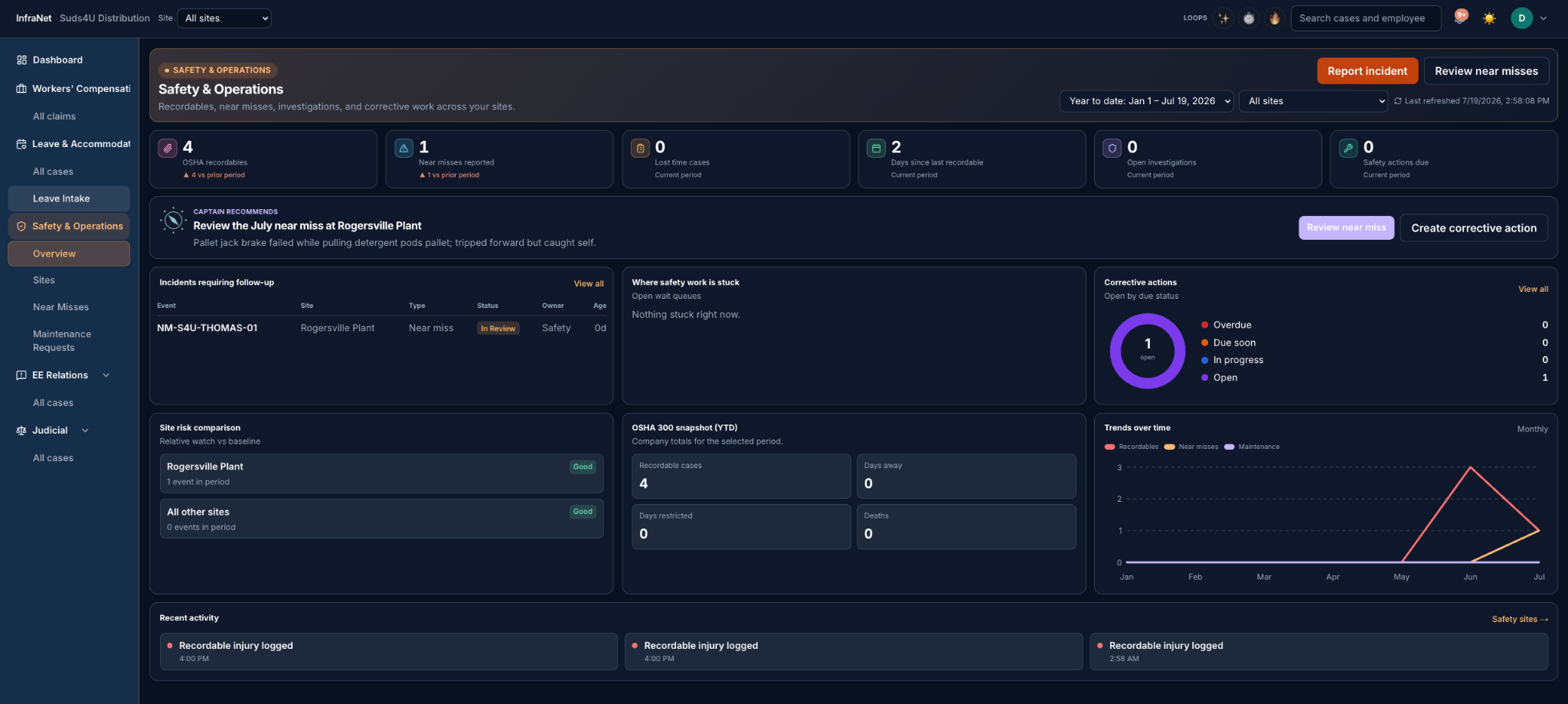
Recordkeeping quality depends on the work that happens before the entry.
The report, treatment information, work relationship, job restrictions, days away, job transfer, claim activity, and later changes all shape the employer’s recordkeeping process.
InfraNet keeps that operating history connected so authorized reviewers can make, document, revisit, and support their determinations.
One incident. A sequence of controlled reviews.
The process stays visible without turning regulatory judgment into automatic classification.
Capture
Record the event, location, people, initial facts, and immediate response.
Review
Evaluate work relationship, outcome, treatment, and applicable criteria.
Document
Complete the incident detail needed for the organization’s Form 301 process.
Log
Create and maintain the approved establishment-level 300 log entry.
Update
Track changing days away, restrictions, transfers, and relevant case facts.
Summarize
Prepare annual establishment totals and the 300A certification workflow.
Capture once, then carry the facts into connected work.
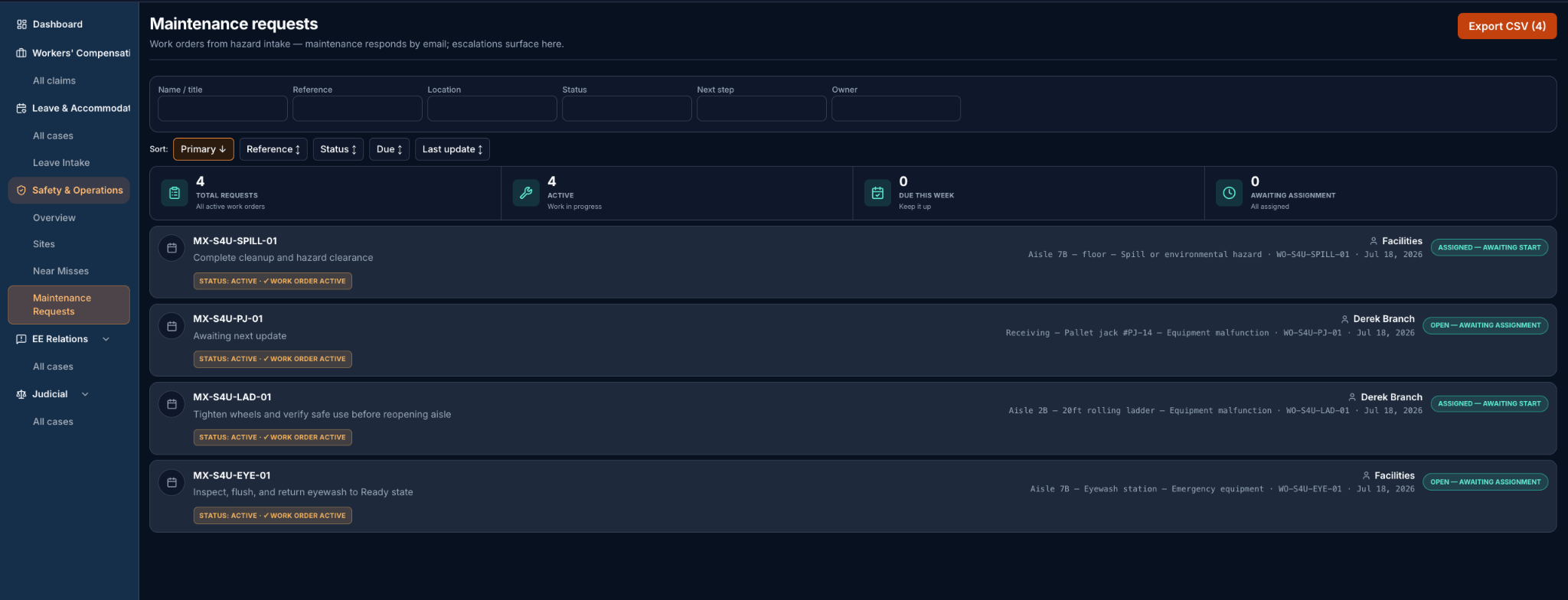
The initial record can support immediate response, investigation, corrective action, workers’ compensation coordination, leave, restrictions, return to work, and OSHA review.
Illustrative interface — facts require validation.
Surface the questions. Preserve the human determination.
InfraNet can organize relevant facts and review steps, but the authorized employer reviewer determines how applicable OSHA requirements apply to the case.
Illustrative workflow — not legal advice.
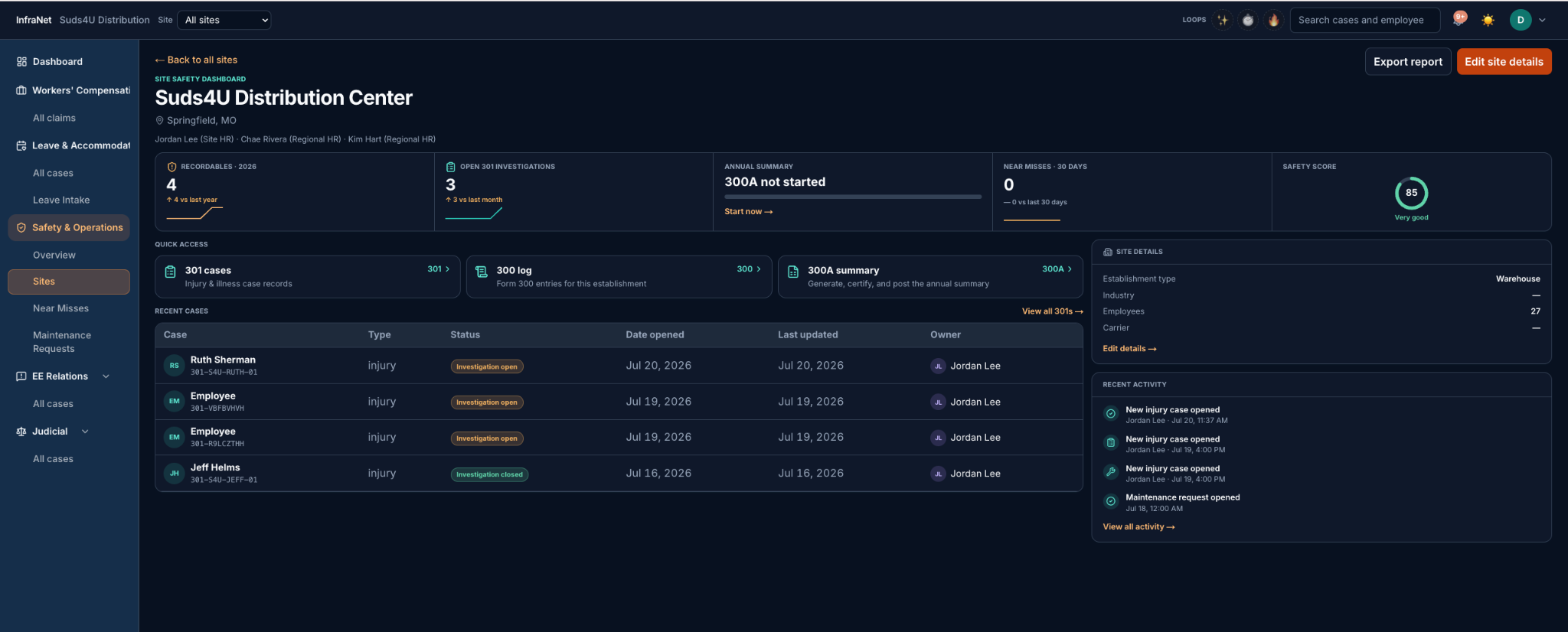
Forms 301, 300, and 300A are related—but they are not the same record.
InfraNet organizes the working information and review states around each recordkeeping responsibility.
Form 301 support
Incident circumstances, affected employee details, treatment, event description, and relevant supporting history.
OSHA 300 support
Establishment assignment, classification, outcome, days, restrictions, transfer, and updated status.
Form 300A support
Establishment totals, hours and employment inputs, review, executive certification, and posting workflow.
Illustrative timeline — counting and classification require authorized review.
The first log entry may not be the final state.
Medical information, work status, restrictions, days away, job transfer, and claim developments can change after initial review. InfraNet keeps updates connected and brings affected recordkeeping work back to attention.
Prepare each establishment for review, certification, and posting.
Annual preparation brings together establishment assignment, log completeness, case updates, totals, employment and hours data, reviewer questions, executive certification, and posting status.
Illustrative status view — customer controls certification and posting.
Clear establishments, access, authority, and history.
Establishment structure
Keep incidents, logs, annual summaries, and posting workflows aligned to the correct establishment.
Sensitive access
Separate operational visibility from access to medical, personnel, and other restricted information.
Human authority
Record the reviewer, determination, rationale, approval, certification, and later changes.
Connected history
Keep claims, restrictions, corrective action, and return-to-work activity available to authorized reviewers.
See how the facts move from report to annual recordkeeping.
We’ll map the incident, review points, records, updates, owners, and annual controls so you can see where InfraNet fits.