The current state of HR in high-stakes industries is a collection of islands.
Safety lives in a spreadsheet. Workers’ compensation is buried in an insurance portal. FMLA leave is tracked in a personal email inbox. Workplace investigations are scribbled on yellow legal pads or stored in isolated Word documents.
Every case is different. Every case has legal consequences. Every case is currently invisible to the rest of the organization.
When your data is siloed, you are not managing risk. You are merely reacting to it. In manufacturing, logistics, and food production, this lack of visibility is a direct threat to the bottom line. It creates blind spots where patterns of liability grow unchecked.
The manual process is failing because it assumes these events are independent. They are not. A "near-miss" on the floor is a precursor to a workers' comp claim. An unmanaged intermittent leave request is a precursor to a production delay. A poorly documented behavioral concern is a precursor to a litigation nightmare.
The Fragmentation Trap: The High Cost of Disconnection
Fragmented data is a silent drain on operational capital. For a mid-sized manufacturing plant, the cost of these data silos is estimated between $800,000 and $2.3 million annually.
This loss is not a single line item. It is the sum of a thousand small gaps. It is the cost of:
- Duplicated effort.
- Inconsistent record-keeping.
- Delayed decision-making.
- Regulatory fines.
- Escalated legal fees.
When your employee incident management software does not communicate with your leave tracking or your training records, you lose the ability to see the "why" behind the "what." You see that an employee was injured, but you don't see that they were working their sixth consecutive 12-hour shift or that their safety certification expired 30 days ago.
The Proof in the Numbers: Why Integration Is Not Optional
The financial impact of mismanaged workforce data is measurable and severe.
- Productivity and Safety: 92% of workers state that a strong safety culture directly boosts their productivity. When safety is treated as a separate, administrative burden rather than an integrated operational metric, productivity suffers.
- The Retention Crisis: Replacing a single employee in a physically demanding industry typically costs 150% to 200% of their annual salary. Data silos exacerbate turnover by creating inconsistent enforcement of safety rules and leave policies, leading to employee burnout and exit.
- The Compliance Burden: The global data integration market is projected to reach over $30 billion by 2030. Organizations are not spending this money for convenience; they are spending it to survive a regulatory environment that demands defensible, audit-ready data at a moment's notice.
Fragile, person-dependent systems: like the "safety guy" who keeps everything in his head: cannot withstand an OSHA audit or a litigation subpoena. You need a robust, documented, and automated process.
Structured Workflows: Transforming Data into Intelligence
InfraNet HR replaces the "island" approach with a unified workforce management platform. We don't just store data; we create a structured interactive process that connects every event to its broader organizational context.
Workers' Compensation Management
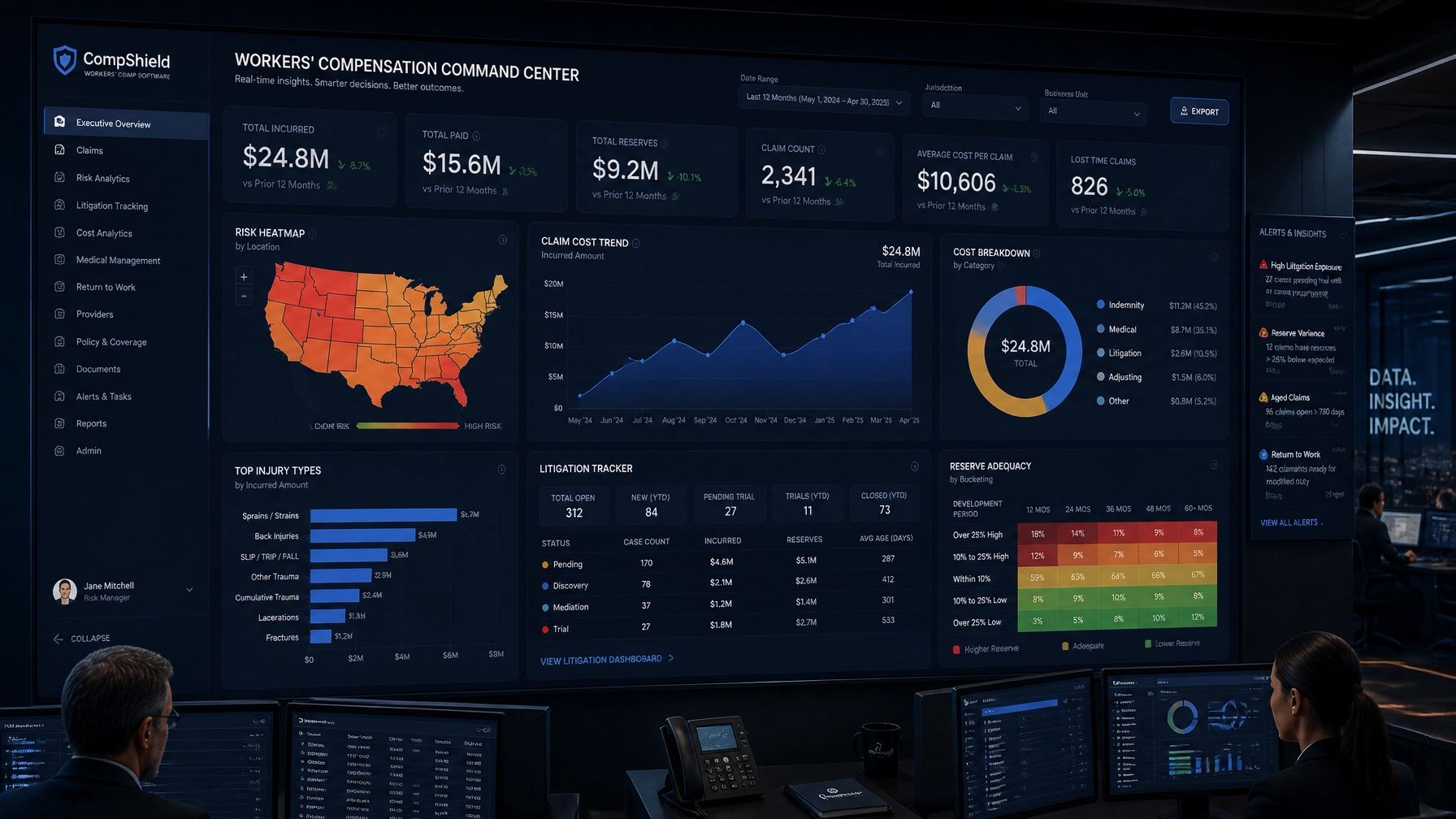
Our workers compensation software manages the entire lifecycle of a claim. It moves beyond simple reporting to track medical progress, indemnity payments, and litigation milestones. By connecting this data to safety reports, we surface the hidden patterns of liability that lead to recurring injuries.
Automated Leave & Accommodation
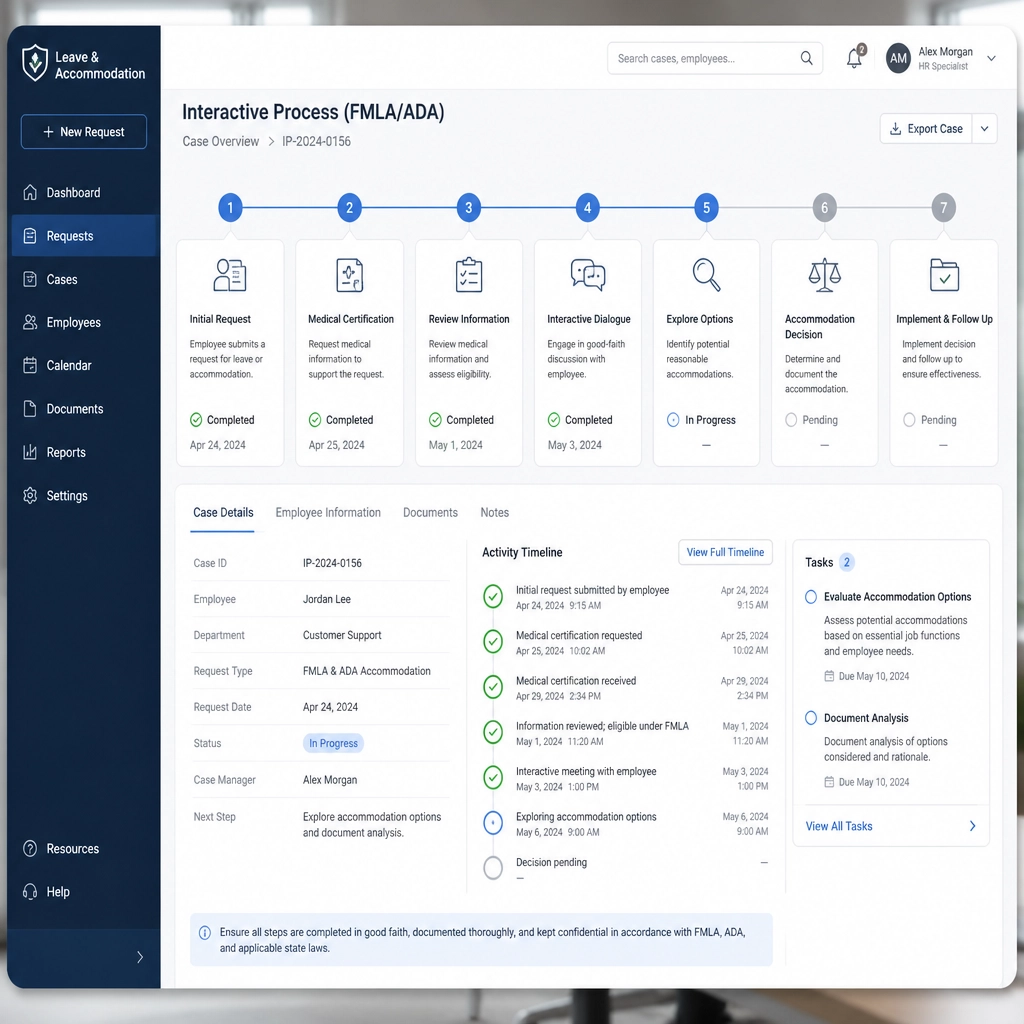
Manual FMLA and ADA tracking is a legal minefield. Our platform automates the management of leave through a structured interactive process. It logs intermittent leave, tracks medical certifications, and ensures PWFA compliance. When leave is integrated, supervisors know exactly who is on the floor and who is qualified to be there.
OSHA Compliance and Incident Reporting
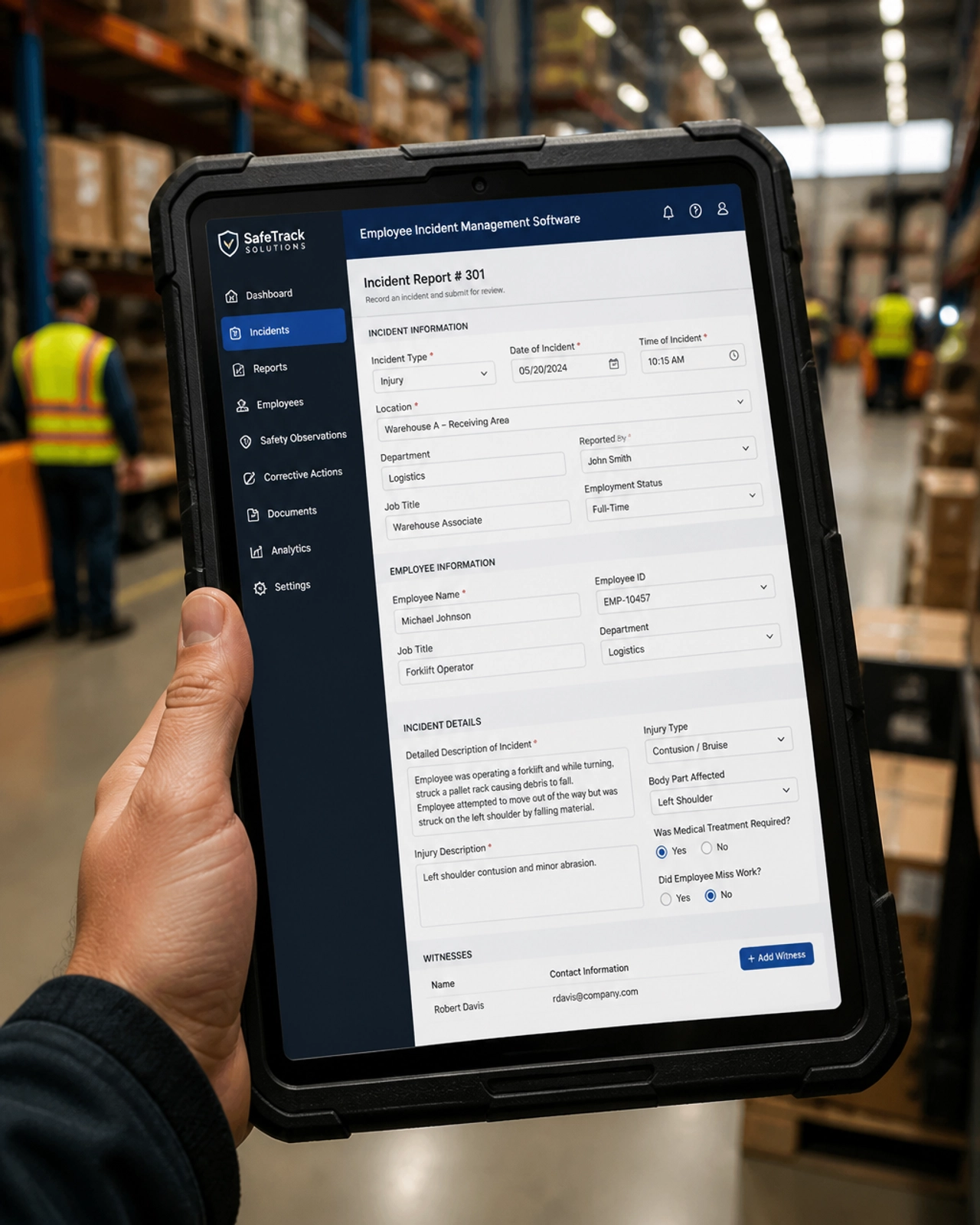
Simplify the transition from an incident to an audit. Our system generates 301-style incident reports and automates the creation of OSHA 300 and 300A logs. This is not just about filing paperwork; it is about establishing a defensible audit trail that protects the organization from heavy fines.
Workplace Investigation Audits
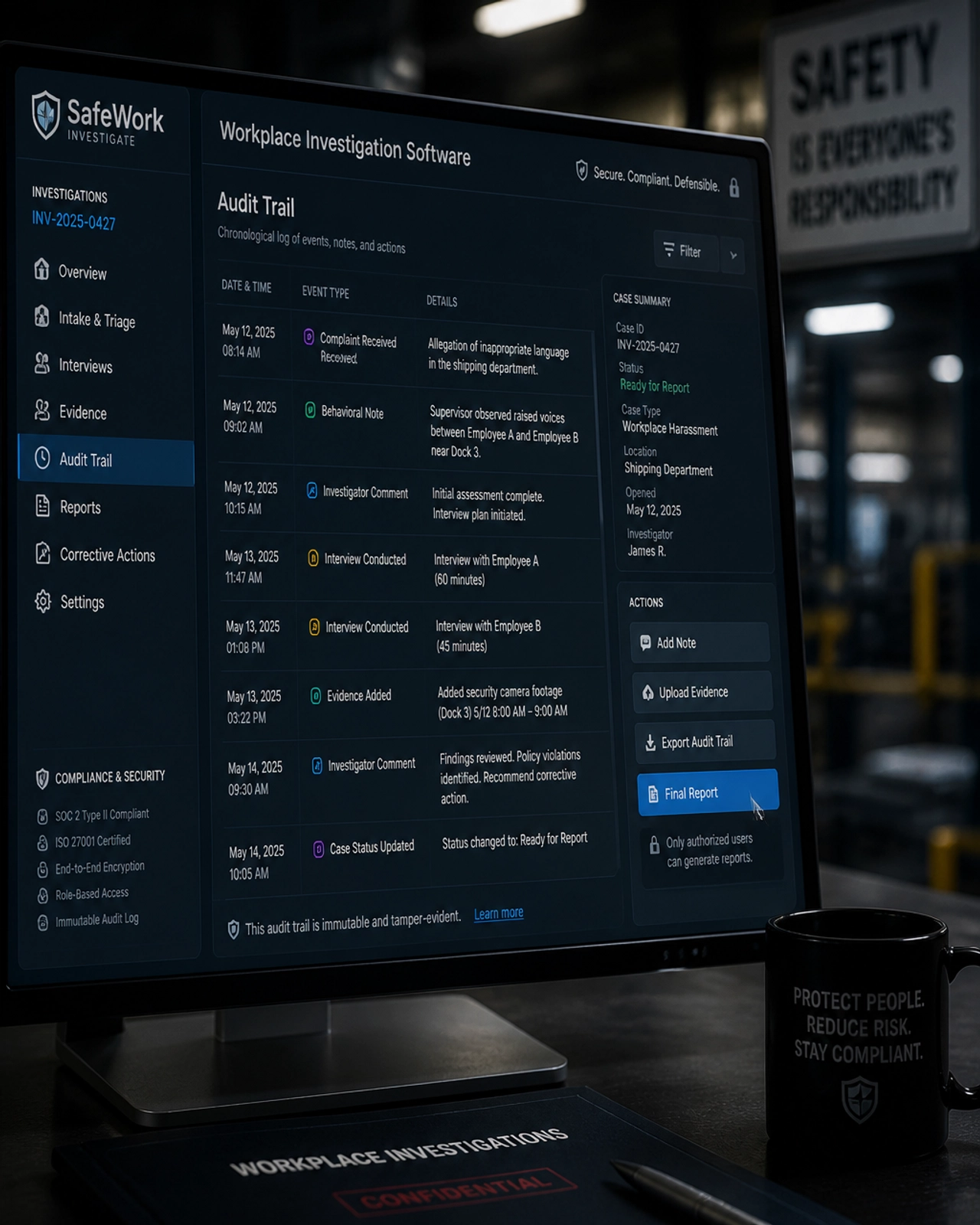
Track employee complaints and behavioral concerns with a full, unalterable audit trail. Our workplace investigation software ensures that every step of an investigation: from the initial report to the final resolution: is documented. This prevents sensitive information from "disappearing" between departments and provides a clear defense against future claims of negligence or retaliation.
From "Siloed" to "Seen": The Power of Cross-Departmental Visibility
The core USP of InfraNet HR is visibility. We transform isolated workforce events into actionable HR data analytics for manufacturing.
In a siloed environment, the safety manager sees a "slip and fall." The HR manager sees a "disability leave request." The operations manager sees a "missing body on the line."
In an integrated environment, the system sees a predictable risk.
It identifies that the slip and fall occurred on a specific shift that has a 20% higher incident rate than the others. It flags that the employee’s leave request is tied to a chronic issue that could have been mitigated with a simple workstation accommodation three months ago.
This is the shift from hindsight to foresight.
Integrated safety management system software allows you to mitigate legal risks before they escalate. It prevents things from "falling through the gaps" because there are no gaps. The data flows seamlessly from the initial incident report to the workers' comp claim, through the leave and accommodation process, and into the final safety log.
The Bottom Line: Defensibility Through Documentation
A manual system is a liability. It is vulnerable to human error, memory lapse, and staff turnover. If your documentation is scattered across different departments, you have no documentation at all: at least not in the eyes of a regulator or a judge.
The transition to integrated HR data is not an IT project; it is a risk management imperative. It is about protecting your people, your productivity, and your profit.
Stop managing islands. Start managing intelligence.
InfraNet HR connects your fragmented data to provide the operational intelligence you need to prevent recurring issues and reduce the high cost of workplace mismanagement.
Integrated data isn’t just a better way to report; it’s the only way to stay compliant in a high-stakes environment.