At 6:05 AM on a Tuesday, a conveyor belt on Line 4 jams for the third time this month. The supervisor, Joe, sighs and clears it with a pry bar, just like he did last week. It’s a "minor" annoyance. No one is bleeding. No one goes to the ER. Joe makes a quick note in the safety log: Line 4 jam cleared. 10 minutes downtime.
Two weeks later, a new hire tries to clear that same jam and loses two fingers.
When the Safety Director looks back at the records, they see the injury. When the Maintenance Manager looks at their records, they see a history of "mechanical adjustments." When HR looks at their records, they see that the new hire's safety training was delayed due to a payroll onboarding glitch.
The data existed. But because the systems were only "counting" events instead of "connecting" them, no one saw the catastrophe coming.
This is the failure of the traditional safety management system software. It acts as a digital filing cabinet, perfect for storage, but useless for strategy. In high-stakes environments like manufacturing and logistics, a safety system that doesn't talk to HR, Workers' Comp, and Operations is just a high-tech way to document your own negligence.
The Digital Filing Cabinet Problem
Most organizations approach safety management as a compliance checkbox. You need a way to track OSHA 300 logs, so you buy software. You need to track workers’ comp claims, so you get a different portal. You need to manage FMLA, so you use a third.
The problem isn't that you lack data; it's that your data is fragmented.
When safety incidents are siloed, you lose the "Operational Truth." A near-miss on the warehouse floor isn't just a safety metric. It's a signal that may involve:
- Training Gaps: Did the employee receive the correct certification? (HR data)
- Physical Limitations: Was the employee recently returned to work on light duty? (Workers’ Comp data)
- Fatigue Patterns: Has this person worked 60 hours this week due to a surge in orders? (Payroll/Timekeeping data)
Traditional safety software doesn't care about the 60 hours or the light duty status. It only cares that a pallet fell. By the time you "count" the incident, the damage, both human and financial, is done.
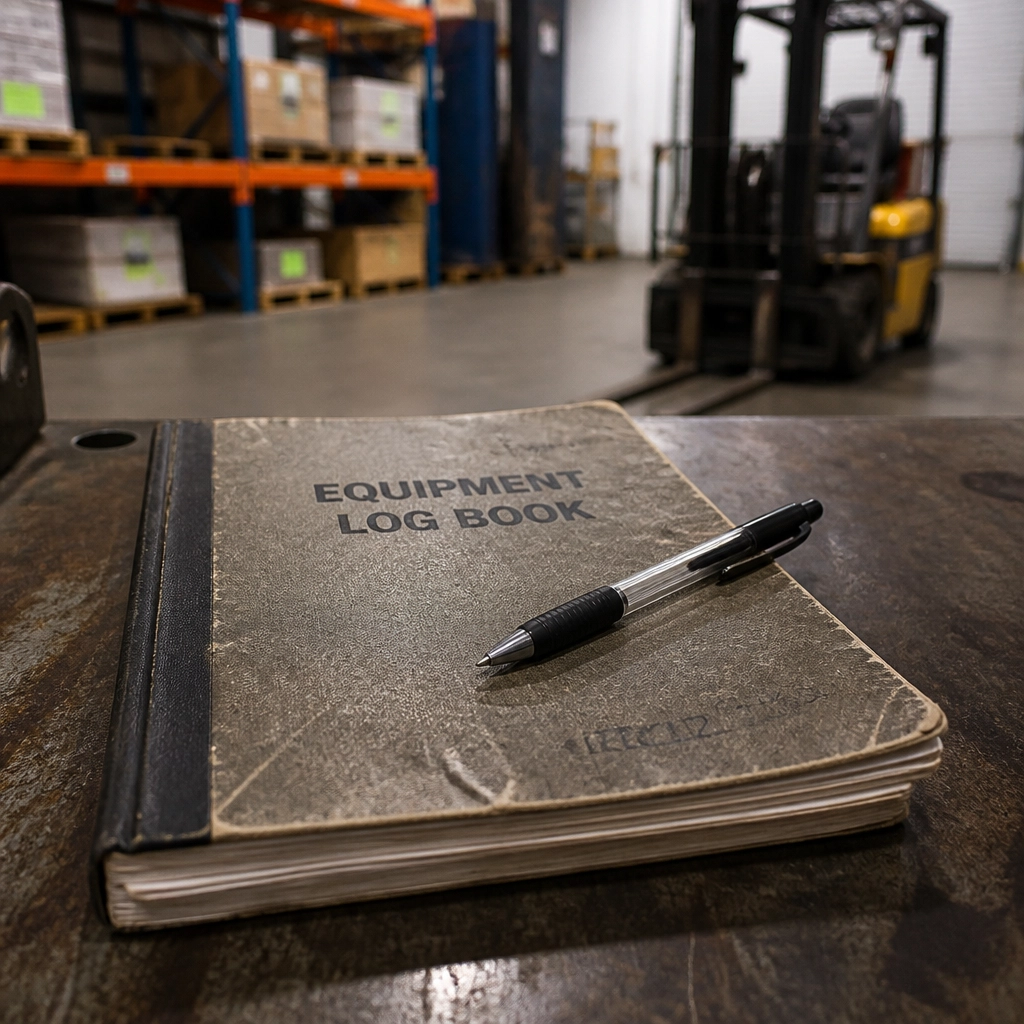
The Traditional Approach: Reactive and Disconnected
In a typical $50M manufacturing plant, safety is often managed through a mix of spreadsheets, email threads, and a standalone EHS (Environmental, Health, and Safety) tool.
When an injury occurs, the work fragments:
- Safety investigates the site and logs the incident.
- HR checks the employee's file and starts the leave process.
- Operations reroutes the shift to cover the gap.
- Finance/Legal waits for the workers' comp claim to hit the books.
None of these people are looking at the same screen. The "handoff" between Safety and HR is a manual email that often gets buried. Documentation is duplicated, or worse, contradictory.
This fragmentation is expensive. According to the American Society of Safety Professionals (ASSP), companies with robust, integrated safety management systems see an average 14% increase in productivity and a 15% reduction in operational costs. Conversely, failing to connect these dots leads to the "Spreadsheet Trap," where managers spend 10+ hours a week just moving data from one box to another.
A Better Way: Connected Operational Intelligence
The modern approach to safety management system software isn't about better forms; it's about better connections. It’s moving from "What happened?" to "Why did this happen across our entire operation?"
Imagine if, the moment Joe logged that conveyor jam on Line 4, the system automatically:
- Flagged the recurring nature of the mechanical issue to Maintenance.
- Cross-referenced the "Near Miss" with the training records of everyone assigned to that line.
- Triggered a proactive "Safety Stand-Down" for that specific shift before the next jam occurred.
This isn't science fiction; it's operational intelligence. It’s the realization that a safety event is a symptom of an operational friction point.
The Financial Stakes of Disconnection
Ignoring these connections isn't just bad for morale, it’s a massive financial liability. OSHA penalties for 2025 are no joke. A single "Serious" violation can cost up to $16,550, while "Willful or Repeated" violations can skyrocket to $165,514 per violation (OSHA Penalty Source).
Beyond the fines, the National Safety Council (NSC) estimates the average cost of a single non-fatal workplace injury at roughly $39,000. When you factor in indirect costs, lost productivity, machine downtime, and increased insurance premiums, the ROI of a connected system becomes undeniable. Research consistently shows a $2 to $6 return for every $1 invested in integrated safety systems.

How InfraNet Bridges the Gap
At InfraNet HR, we don't build "case management" tools. We build an operational platform that connects the fragmented pieces of your workforce.
When a safety incident happens in InfraNet, it doesn't stay in a safety silo. The work is automatically coordinated across the organization:
- To Workers' Comp: The incident report immediately populates the claim workflow, ensuring the workers' comp lifecycle is managed from day one to reduce litigation risk.
- To OSHA Compliance: The event is instantly categorized for your OSHA 300 and 300A logs, eliminating year-end panic and reporting errors.
- To Leave & Accommodations: If the injury requires time off, the system triggers the FMLA and ADA interactive process automatically, ensuring you stay compliant with federal labor laws.
- To Visibility: Leadership sees a real-time dashboard showing the relationship between injuries, shift timing, and supervisor training levels.
We transform an isolated workforce event into a coordinated response. Instead of Joe's "Line 4 jam" note disappearing into a drawer, it becomes a data point that prevents a six-figure lawsuit and a life-altering injury.
Broader Insight: The Challenge is Coordination
The hardest part of safety isn't the safety itself, it’s coordinating everything that happens because the event occurred.
The injury happens once. The work ripples through HR, Payroll, Safety, and Legal for months. If those departments are working in isolation, you aren't just losing money; you're losing the trust of your workforce.
Stop counting incidents. Start connecting them. When your safety system talks to the rest of your business, you stop reacting to the last accident and start preventing the next one.
FAQs
1. What is the main difference between standard safety software and a connected system?
Standard software acts as a repository for incident reports. A connected system (like InfraNet) links those reports to HR training files, workers' comp claims, and leave management, allowing you to see the systemic cause of an injury rather than just the event itself.
2. How does safety management system software improve ROI?
Integrated systems provide a 4–6x return on investment. This is achieved by reducing the administrative time spent on double-entry, lowering workers' compensation premiums, and preventing high-cost OSHA fines (which can reach over $165,000 for repeated violations).
3. Can this software help with OSHA 300 compliance?
Yes. Modern systems automate the logging process, ensuring that every recordable incident is instantly captured and correctly categorized for OSHA 300, 300A, and 301 forms, reducing the risk of reporting errors.
4. How does connected safety software help with "Return-to-Work" programs?
By linking safety incidents directly to workers' comp and accommodation workflows, HR and Safety can collaborate in real-time to identify light-duty opportunities, track medical restrictions, and reduce the duration of disability leave.
5. Is this software suitable for smaller manufacturing plants?
Absolutely. While large enterprises benefit from the scale, smaller plants (10–500 employees) often have fewer dedicated HR and Safety staff. A connected system acts as a "force multiplier," handling the coordination that usually requires multiple full-time employees.
6. Does it integrate with training and onboarding?
Yes. A key benefit of a connected platform is the ability to see if an injured worker had completed their required safety certifications. If a gap is found, the system can trigger automated retraining for the entire department.
Suggested SEO Articles
- The Handoff Problem: Why Safety Data Dies in HR’s Inbox (Focus: Communication gaps between departments)
- Beyond the Spreadsheet: The True Cost of Manual OSHA Reporting (Focus: Compliance risks and administrative bloat)
- Workers' Comp vs. Safety: Why These Two Teams Should Be Best Friends (Focus: Financial impact of integrated claims management)
SEO Title: Safety Management System Software | Operational Intelligence | InfraNet HR
Meta Description: Stop just logging incidents. Discover how connected safety management system software bridges the gap between safety, HR, and ops to prevent recurring risks.