SEO Title: Workplace Investigation Software: Close the Ownership Gap Before Risk Escalates
Meta Description: Workplace investigations stall when ownership is unclear. See how InfraNet HR connects complaints, deadlines, OSHA events, leave, and wo
It is 10:15 AM on a Tuesday. In a busy food production facility, an employee pulls their supervisor aside to report a serious harassment concern involving a senior shift lead. The supervisor, focused on hitting the day’s production quota, tells the employee to "send an email to HR."
The employee sends the email.
But the HR Director is at a three-day leadership conference. The plant manager hears a rumor about the conflict during the afternoon shift change but assumes HR is already on top of it. By Thursday, the employee, feeling ignored and vulnerable, concludes that the company is protecting the shift lead. By Friday afternoon, they’ve contacted an attorney.
When the HR Director finally opens that email on Monday morning, the damage is no longer just the original complaint. It is the perception that the company failed to respond when the employee needed protection.
In high-stakes industries like manufacturing, logistics, and construction, workplace investigations don’t usually fail because of a lack of evidence. They often stall because of an Ownership Gap.
The Operational Truth: The Process IS the Compliance
Most organizations believe that "documentation reduces risk." They think that as long as they eventually write down what happened, they are protected.
This is a dangerous misunderstanding of how labor law and operational reality intersect. In the eyes of regulators and courts, a delayed response can become more than a bottleneck. Depending on the facts, it may be used as evidence that the organization failed to take the complaint seriously or allowed retaliation risk to grow.
According to the EEOC’s FY 2024 statistics, retaliation remains the most frequently alleged basis of discrimination, accounting for approximately 48% of all charges filed. When a complaint is filed, a "loop" is opened. If no one is explicitly assigned to close that loop in real-time, the silence from management is often interpreted by the employee (and their counsel) as a punitive response for speaking up.
The truth is that the process of investigating is the compliance itself. Documentation is simply a record of whether that process was executed or if it stalled in the Ownership Gap.
The Spreadsheet Trap: Why Traditional Methods Fail
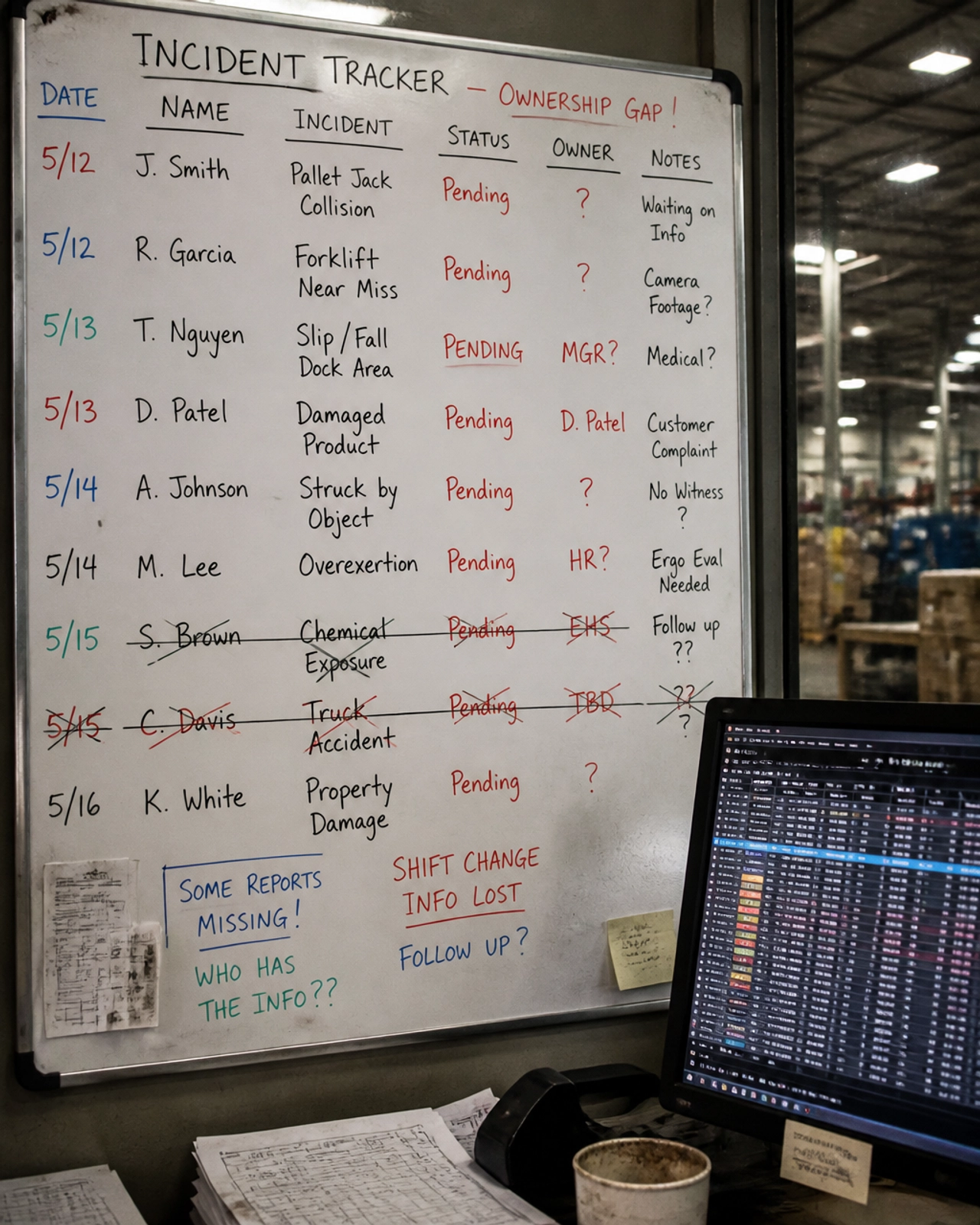
For companies with 100 to 1,500+ employees, the typical approach to managing investigations is a mix of:
- Ad-hoc Emails: Threaded conversations that get buried in inboxes.
- The "Master" Spreadsheet: A manual log that is only as accurate as the last person who remembered to update it.
- Physical Files: Paper folders sitting on desks, inaccessible to the rest of the leadership team.
This is the "Spreadsheet Trap." It creates a false sense of security while hiding the operational friction that leads to delays. In this fragmented system, "ownership" is often implied but rarely enforced. HR thinks the Plant Manager is gathering witness statements; the Plant Manager thinks HR has already started the interviews.
Meanwhile, the clock is ticking. The EEOC’s FY 2024 data shows the agency received 88,531 new discrimination charges and recovered nearly $700 million for more than 21,000 victims across all enforcement activities. The lesson for employers is clear: once a complaint is raised, response quality matters.
Closing the Gap with Modern Coordination
To eliminate the Ownership Gap, organizations must stop viewing investigations as "HR cases" and start viewing them as coordinated work.
A modern approach requires workplace investigation software that enforces accountability through:
- Automated Routing: When a complaint is entered, the system immediately notifies the responsible parties. There is no "waiting for someone to check their email."
- Explicit Ownership: Every step of the investigation, intake, witness interviews, evidence collection, and final determination, must have a clear owner and a deadline.
- Cross-Departmental Visibility: Safety, Operations, and HR should see the status of the investigation (without necessarily seeing sensitive details) so they can coordinate shifts or reporting lines to prevent further conflict.
- Timeline Integrity: A digital audit trail that helps show the company responded promptly, assigned responsibility, gathered facts, and took appropriate corrective action where needed.
How InfraNet HR Connects the Fragmented Data
At InfraNet HR, we don't just provide a place to store files. Our platform is built to solve the handoff problem.
When a workplace investigation begins, it often intersects with other departments. Is the employee also on an FMLA leave? Was there a prior safety incident or workers' comp claim involving the same individuals?
In a disconnected system, HR wouldn't know these facts until it was too late. InfraNet’s integrated workforce management platform connects these fragmented data points. It surfaces hidden patterns, like a specific shift lead who has three "near-miss" safety reports and two behavioral complaints in the last quarter.
By connecting workplace investigations, OSHA compliance, leave, workers' comp, and operational reporting, InfraNet helps teams track every event from "loop opened" to "loop closed." The result is fewer buried handoffs, clearer ownership, and a stronger record of action when decisions are later questioned.
The Broader Insight: Coordination is the Cure
The challenge of workplace investigations isn't just about finding out "who did what." It’s about coordinating everything that happens because the event occurred.
The investigation is the catalyst for a dozen other operational needs: adjusting schedules, updating safety logs, notifying insurance carriers, and managing employee morale. If these tasks are fragmented, the organization is exposed.
Close the Ownership Gap by moving away from "documentation as a record" and toward "coordination as a strategy." When you connect the work, you don't just mitigate risk, you build a culture of accountability that keeps your operations moving forward.
Want to see where investigations are stalling inside your organization? InfraNet HR helps manufacturing, logistics, and construction teams connect complaints, investigations, OSHA events, leave, workers' comp, and operational follow-through in one platform. Schedule a walkthrough to see how quickly a complaint can move from intake to resolution.
FAQs
1. What is the "Ownership Gap" in workplace investigations?
The Ownership Gap occurs when a complaint is reported but no specific individual or system is assigned to drive the investigation to completion. This can lead to delays that increase retaliation risk and make the company's response harder to defend.
2. Why is workplace investigation software better than a spreadsheet?
Spreadsheets are static and rely on manual updates, leading to "the spreadsheet trap" where data is outdated or missing. Dedicated software automates notifications, sets deadlines, and creates a secure audit trail for compliance.
3. How does a delay in an investigation increase retaliation risk?
If an employee files a complaint and management remains silent or slow to act, any subsequent change in that employee's work environment (like a shift change or disciplinary action) can be perceived as punishment for speaking up.
4. What are the key features of workplace investigation software?
Effective software should include automated routing, secure document storage, task assignment with deadlines, cross-departmental reporting, and a full audit trail for legal defense.
5. How does InfraNet HR handle multiple types of employee events?
InfraNet connects data from investigations, workers' comp, leave management, and OSHA compliance into a single operational view, surfacing hidden liabilities across the organization.
6. Is documentation alone enough to protect a company from lawsuits?
No. Documentation is only the record. Compliance depends on a prompt, thorough, and appropriate response. If the record shows that an investigation took six weeks to start, the documentation may create more risk than protection.