A supervisor on your manufacturing floor gets a note from an employee. The employee says they can't lift more than 20 pounds for the next month.
The supervisor looks at the note, sighs, and says, "We don't have 'light duty' here. Come back when you're 100%."
To the supervisor, this is a simple policy decision. To the EEOC, this is a lawsuit in the making.
Most HR teams think they are doing the right thing. They keep a folder for medical notes. They track requests in a spreadsheet. They try to be helpful when they have time.
But they are "accommodating" the ADA rather than managing it. They treat accommodations like a series of favors or administrative chores.
The ADA is not a document management problem. It is a workflow management problem.
If your ADA process relies on a manager’s memory or a scattered paper trail, you have unclosed loops. And in the world of compliance, an unclosed loop is where legal risk hides.
The "Favor" Fallacy
Many employers view a reasonable accommodation as a "gift" they give to employees. They think if they can't easily do what the employee asks, the conversation is over.
This is the first big mistake. The Americans with Disabilities Act (ADA) does not ask you to just "say yes or no." It requires you to engage in an "interactive process."
The interactive process is a back-and-forth dialogue. It is a formal, good-faith search for a solution. You do not have to provide the exact accommodation the employee wants. But you do have to prove you tried to find something that works.
When you treat this like a "favor," you skip the process. You skip the documentation. You create a "he-said, she-said" scenario that falls apart in court.
The Interactive Process Is a Workflow, Not a Folder
Documentation does not equal process.
You might have a doctor’s note in a digital folder. That's documentation. But do you have a record of the conversation you had with the supervisor? Do you have the date you asked the employee for clarification? Do you have the analysis of why a specific request was an "undue hardship"?
If those pieces are scattered, your process is broken.
The EEOC and courts treat the interactive process as a core obligation. In fact, the side that "blows up" the process by being unresponsive or rigid is the side that usually loses the lawsuit.
In high-stakes industries like manufacturing and logistics, these handoffs are where the loops stay open.
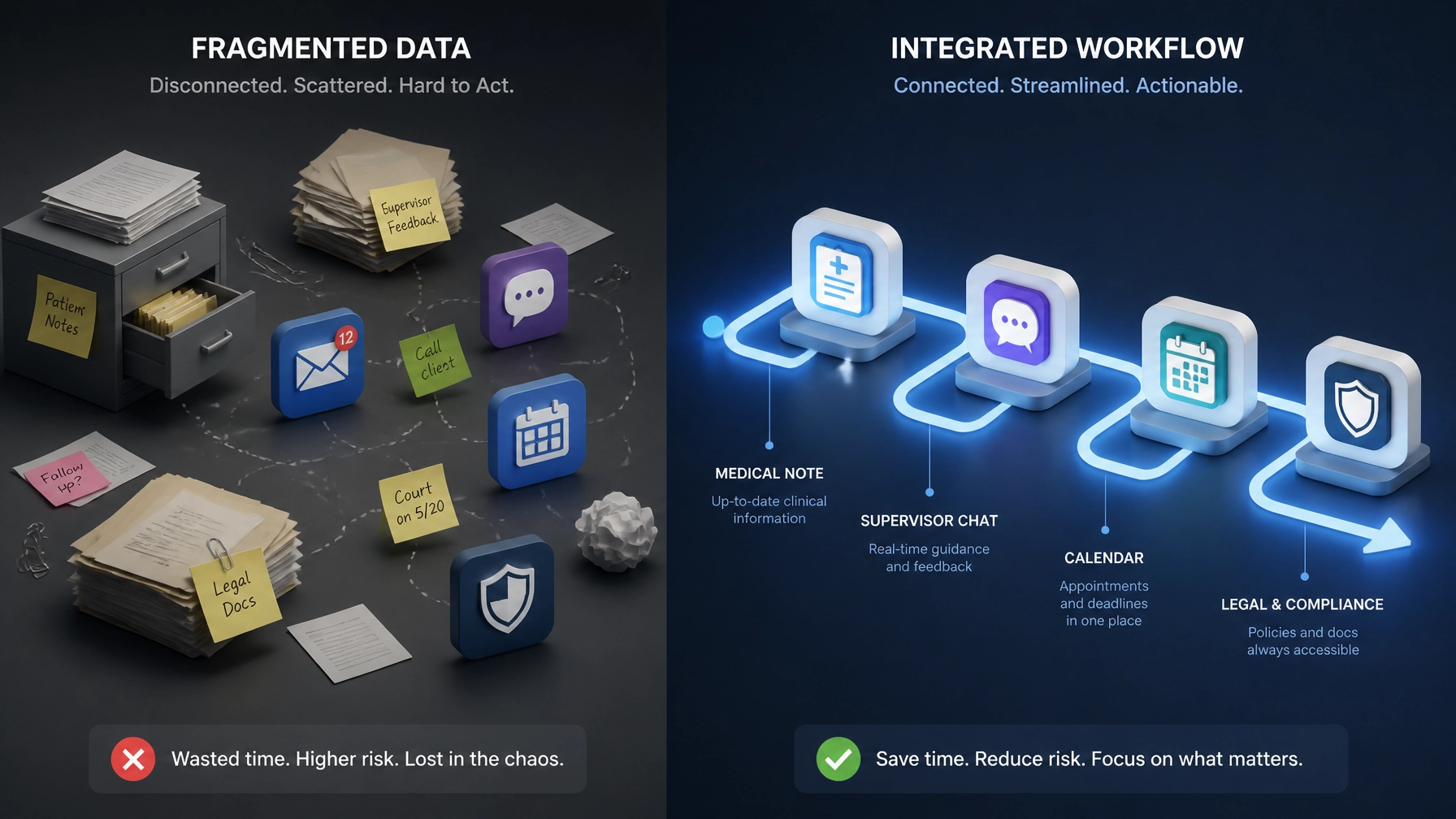
- The Broken Handoff: The employee tells a supervisor about a medical issue. The supervisor doesn't tell HR.
- The Missed Trigger: HR receives a Workers’ Comp claim but doesn't realize it also triggers an ADA obligation.
- The Leave Gap: An employee is on FMLA leave. Their leave ends, but they still have restrictions. No one starts the ADA dialogue because they think the "leave problem" is finished.
Every one of these is an event. Events create obligations. Obligations have deadlines. If you don't have a case management system that connects these events, you are walking into a trap.
The Danger of the "Silent" Trigger
Most HR professionals wait for an employee to say the words "I need a reasonable accommodation."
But the law doesn't require "magic words."
A request is triggered the moment an employer has enough information to know that a medical condition is interfering with work.
In a busy warehouse or production plant, this happens every day:
- An employee mentions their back is hurting and they need more breaks.
- A doctor sends a "return to work" slip with permanent restrictions.
- A manager notices an employee is struggling with a physical task they used to do easily.
These are all "triggers." If you ignore them, you have failed the first step of the ADA interactive process.
The risk is even higher when you have fragmented data. If your OSHA incident reports aren't talking to your ADA files, you will miss the transition from a safety event to a disability accommodation.
Why Managers Are the Weakest Link
Front-line supervisors are your biggest liability. They are focused on production quotas, not Equal Employment Opportunity Commission (EEOC) guidelines.
When a supervisor tells an employee "go home until you are 100%," they have just committed a "100% healed" policy violation. Courts hate these policies because they are a flat refusal to engage in the interactive process.
You cannot expect every shift lead to be an ADA expert. But you can expect them to follow a workflow.

Instead of letting managers make "yes/no" calls on the floor, you need a system where they can report a "trigger" event immediately. This pulls the event into the InfraNet compliance loop. It takes the decision out of the manager's hands and puts it into a structured process managed by HR.
Closing the Loops: A New Way of Thinking
At InfraNet HR, we don't look at the ADA as a set of documents. We look at it as a series of loops.
A "loop" starts when an event happens: like a new medical restriction. A loop "closes" only when you have:
- Acknowledged the request promptly.
- Gathered the necessary medical documentation (if the need is not obvious).
- Discussed options with the employee in good faith.
- Implemented a solution or documented why you couldn't.
- Followed up to see if the solution is working.
Most companies leave the 5th step open. They implement an accommodation and then forget about it. But the ADA is an ongoing process. If an employee's condition changes, or the job changes, the loop opens again.
This is even more important with the Pregnant Workers Fairness Act (PWFA). The PWFA requires a similar interactive process for pregnancy-related needs. If your system can't handle the ADA, it will not handle the PWFA.
The Audit Trail: Your Best Defense
If you are ever sued, the first thing a lawyer will ask for is your "interactive process file."
If you hand them a folder of emails and a spreadsheet, they will find the gaps. They will ask, "Why did it take 12 days to reply to this email?" or "Where is the record of the conversation with the supervisor?"
But if you show them an automated audit trail that tracks every event, every deadline, and every communication in real-time, the conversation changes.
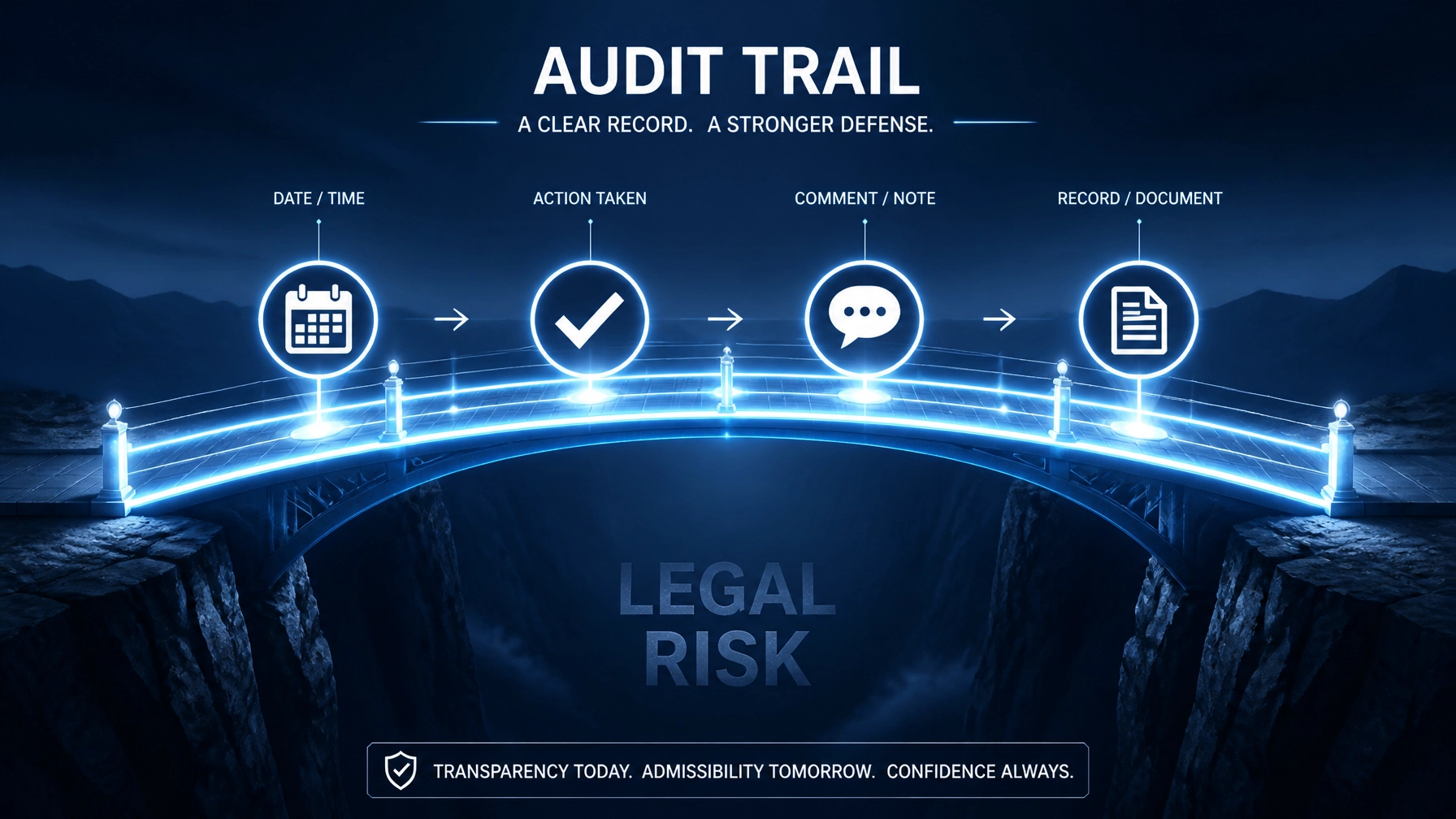
An audit trail proves you acted in good faith. It proves you didn't "blow up" the process. It shows that you treat compliance as an operational workflow, not a side project.
Practical Takeaways for HR Directors
If you want to stop "accommodating" the ADA and start managing it, do these four things:
- Stop using spreadsheets. Spreadsheets are where data goes to die. They don't send alerts. They don't track history. They don't close loops. Use ADA accommodation software that is built for event-driven compliance.
- Centralize the triggers. Train your supervisors to report any mention of medical limitations to HR immediately. Make it an "event" in your system, not a conversation on the floor.
- Connect your data. Your Workers' Comp, FMLA, and Employee Relations teams should be looking at the same data. If they are in different "silos," you will miss the triggers.
- Schedule follow-ups. Set a reminder to check in on every accommodation every 30 to 60 days. This proves the process is "interactive" and ongoing.
The InfraNet Way
InfraNet HR is not an HRIS. We are an event-driven compliance concierge. We connect the dots between fragmented events: from the first injury report to the final return-to-work plan.
We help you close the loops before they become liabilities.