It is 6:05 AM. The floor of a mid-sized automotive parts plant is humming. The shift supervisor, Mike, checks his morning dashboard. It shows 95% staffing, a "green" metric. He breathes a sigh of relief, assigns his crew to the high-volume Line B, and starts the day.
But there is a problem Mike can't see.
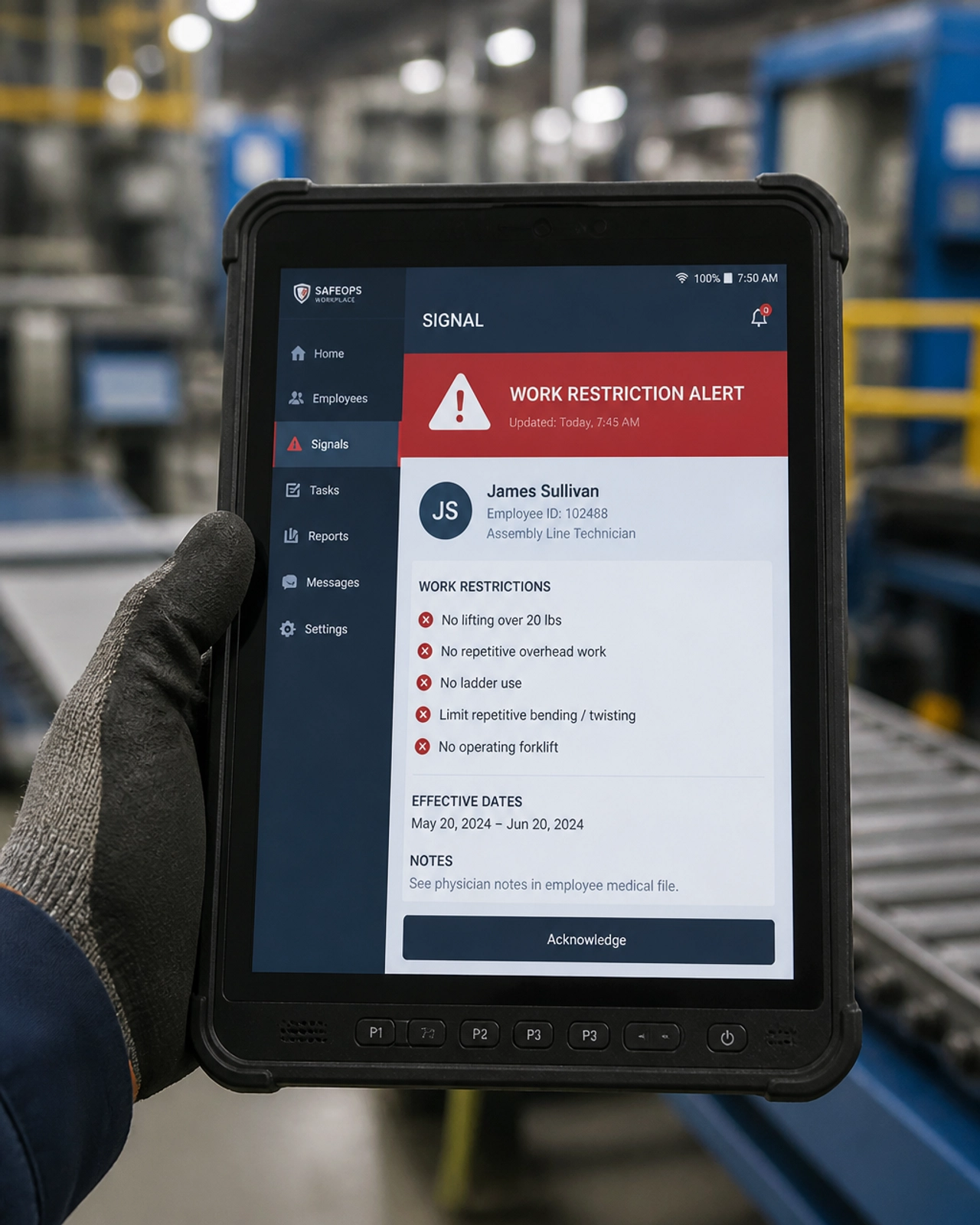
Three of those "staffed" workers returned from FMLA leave yesterday. HR has their paperwork; they know these employees are on restricted duty, unable to lift more than 20 pounds. However, that information is sitting in an HR folder three buildings away. Mike, unaware, assigns one of them to a station requiring heavy repetitive lifting.
By 10:00 AM, that worker is back in the medical clinic with a re-aggravated back injury. The line stops. A workers' comp claim is reopened. The "green" dashboard was a lie.
This is the central failure of HR data analytics for manufacturing. Most companies are drowning in dashboards that show them what happened yesterday, while the floor is starving for signals about what is happening right now.
The Dashboard Trap: Looking at the Rearview Mirror
In many organizations, HR analytics is treated as a post-mortem exercise. Leadership looks at turnover rates, absenteeism percentages, and total recordable incident rates (TRIR) once a month. While these metrics are useful for long-term strategy, they do nothing to prevent the operational friction that happens in the heat of a shift.
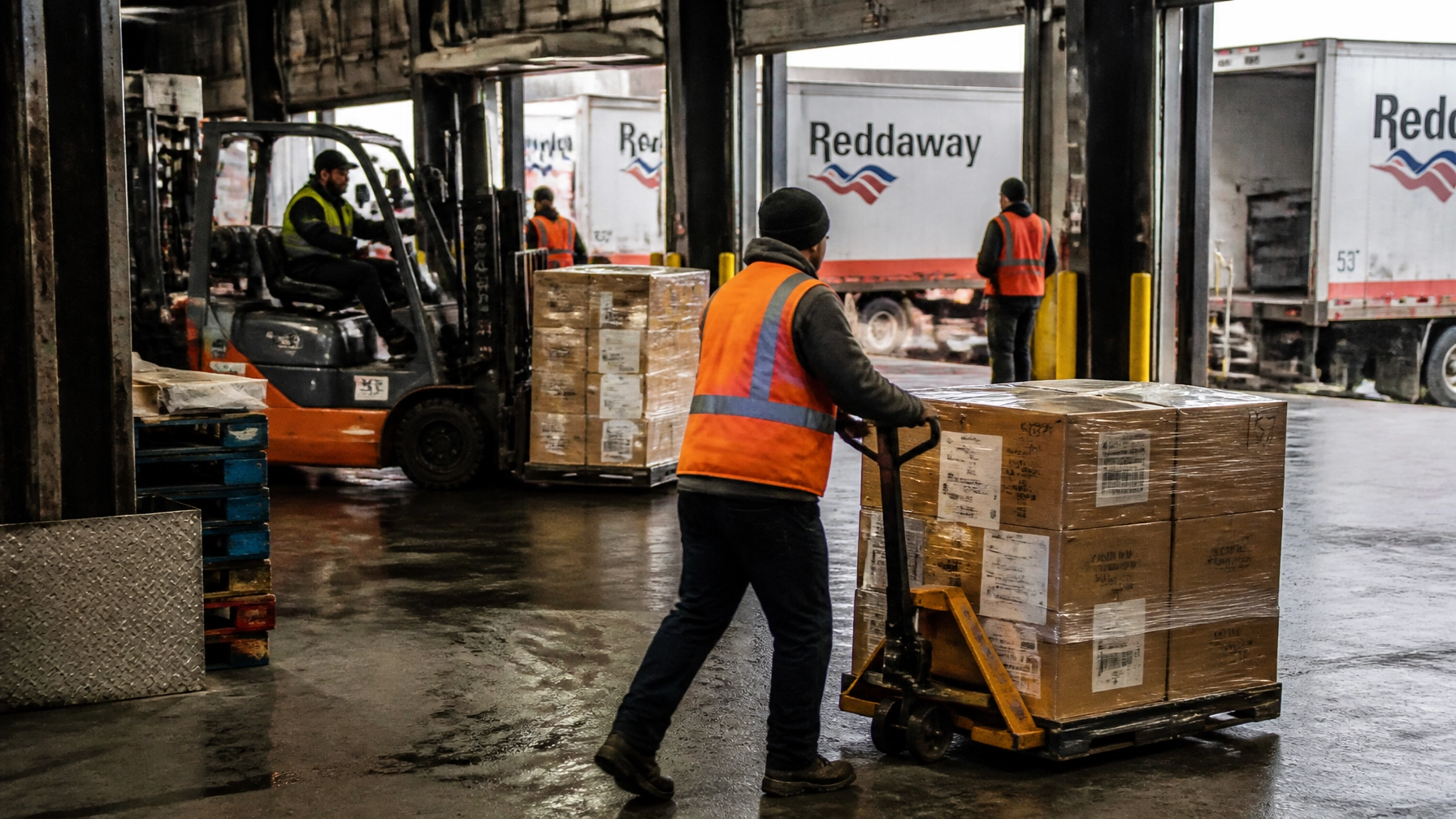
The problem isn't a lack of data; it’s the fragmentation of it. Manufacturing and logistics operations are high-stakes environments where employee events, injuries, leave, accommodations, and behavioral issues, create work across multiple departments.
When HR data is siloed, the organization suffers from:
- Invisible Workforce Risks: Workers returning with restrictions that aren't communicated to the floor.
- The Handoff Gap: Safety knows an incident happened, but HR doesn't know the employee needs an ADA interactive process until two weeks later.
- Compounding Costs: Manufacturing workplace injuries cost U.S. businesses over $170 billion annually (National Safety Council), yet much of this cost is driven by the failure to manage the "aftermath" of an event efficiently.
Traditional Approach: The Spreadsheet and Email "Workflow"
Currently, most plants bridge the gap between HR and the floor with what we call "People-Powered Compensation." This means supervisors, HR managers, and safety officers are constantly emailing, texting, and updating shadow spreadsheets to keep track of who can do what.
When an employee is injured, a chain of manual events begins:
- Safety fills out a paper report.
- HR enters it into a legacy HRIS.
- A medical note is emailed to a general inbox.
- The supervisor is told verbally (or not at all) about the restriction.
This system relies on heroes, people who remember to send that email or update that sheet. But in high-turnover environments like logistics (which saw an injury rate of 4.5 per 100 full-time workers in 2024, according to the Bureau of Labor Statistics), the "hero" approach eventually fails. Data is lost. Compliance is missed. Risks escalate.
Moving from Analytics to Operational Intelligence
Manufacturing doesn't need more charts; it needs signals.
A signal is an alert that triggers a specific action. It moves data out of a passive dashboard and into an active workflow. For example, instead of a chart showing "Active Accommodations," a signal tells the plant manager: "Operator A is restricted to sedentary work. Do not assign to the loading dock."
This shift requires operational intelligence, the ability to see the cross-departmental impact of a single employee event in real-time.
The Power of Coordinated Work
True operational visibility means that when a safety incident is logged via OSHA compliance software, it shouldn't just create a record. It should:
- Immediately alert HR to begin a leave and accommodation review.
- Notify Payroll to adjust for potential disability pay.
- Update the supervisor’s roster with the employee's current capability status.
How InfraNet HR Bridges the Gap
InfraNet HR was built because we saw how fragmented HR data was causing operational chaos on the factory floor. We don't just provide another case management platform; we provide the connective tissue for workforce events.
Our platform connects the dots between:
- Workers' Compensation: Tracking the entire lifecycle of a claim, from the initial "ouch" to the final return-to-work.
- Leave & Accommodation: Automating the complex interactive processes of FMLA, ADA, and PWFA so that "invisible" restrictions become visible to those who need to know.
- Incident Management: Routing safety reports and near-misses to the right people instantly, ensuring that reporting and visibility aren't just buzzwords, but daily tools.
By aggregating data across these categories, we surface the hidden patterns, like a specific line having a higher-than-average near-miss rate, allowing organizations to mitigate legal risks and reduce costs before an injury even happens.

The Broader Insight: Coordination is the Real Challenge
The ultimate realization for manufacturing leaders is this: the challenge isn't just "managing HR." The challenge is coordinating everything that happens because an employee event occurred.
One injury is not just one medical bill; it is a staffing gap, a safety investigation, a potential legal liability, a payroll adjustment, and a supervisor's headache. When you stop treating these as isolated incidents and start treating them as connected operational work, the "invisible" risks disappear.
Stop looking at dashboards that tell you why you failed yesterday. Start looking for the signals that will help you win today.
Frequently Asked Questions
1. What is the difference between HR analytics and operational intelligence?
HR analytics typically focuses on historical data like turnover and demographics. Operational intelligence focuses on real-time "signals" that inform daily work, such as current employee restrictions or pending safety investigations that affect shift staffing.
2. Why is siloed data a problem for manufacturing safety?
When safety data is siloed from HR and production, supervisors may unknowingly put employees back into high-risk roles before they are medically cleared, leading to re-injury and increased workers' comp costs.
3. How can software help with OSHA 300 compliance?
Integrated software automates the logging of incidents directly from the initial report, ensuring that OSHA 300 and 300A logs are accurate, up-to-date, and ready for submission without manual data entry.
4. Can InfraNet HR handle FMLA and ADA tracking?
Yes. InfraNet automates the structured interactive processes for FMLA, ADA, and PWFA, ensuring that all accommodations are documented and that restrictions are visible to the appropriate managers.
5. Is this software suitable for companies with 500+ employees?
Absolutely. We specialize in organizations with 10 to 1,500+ employees, particularly in high-stakes industries like manufacturing and construction where operational complexity is high.
6. Does the platform integrate with existing payroll systems?
InfraNet is designed to connect fragmented data. While it tracks the events that drive payroll changes (like disability leave or workers' comp status), it acts as the operational layer that informs your existing back-office systems.