The phone rings on a Tuesday morning. It’s a supervisor from your distribution center. He tells you a long-term forklift operator just walked off the floor because a co-worker made a series of "inappropriate comments."
You do what any good HR professional does. You tell the supervisor to send the employee home for the day with pay. You open a new folder on your computer. You name it "Incident_Log_June_2026." You start a Word document, jot down some notes from the phone call, and save it.
Three months later, you receive a notice from the EEOC. That forklift operator was fired for a legitimate safety violation two weeks ago, but now they’re claiming retaliation. They say you ignored their original complaint and that their supervisor "had it out for them" ever since they spoke up.
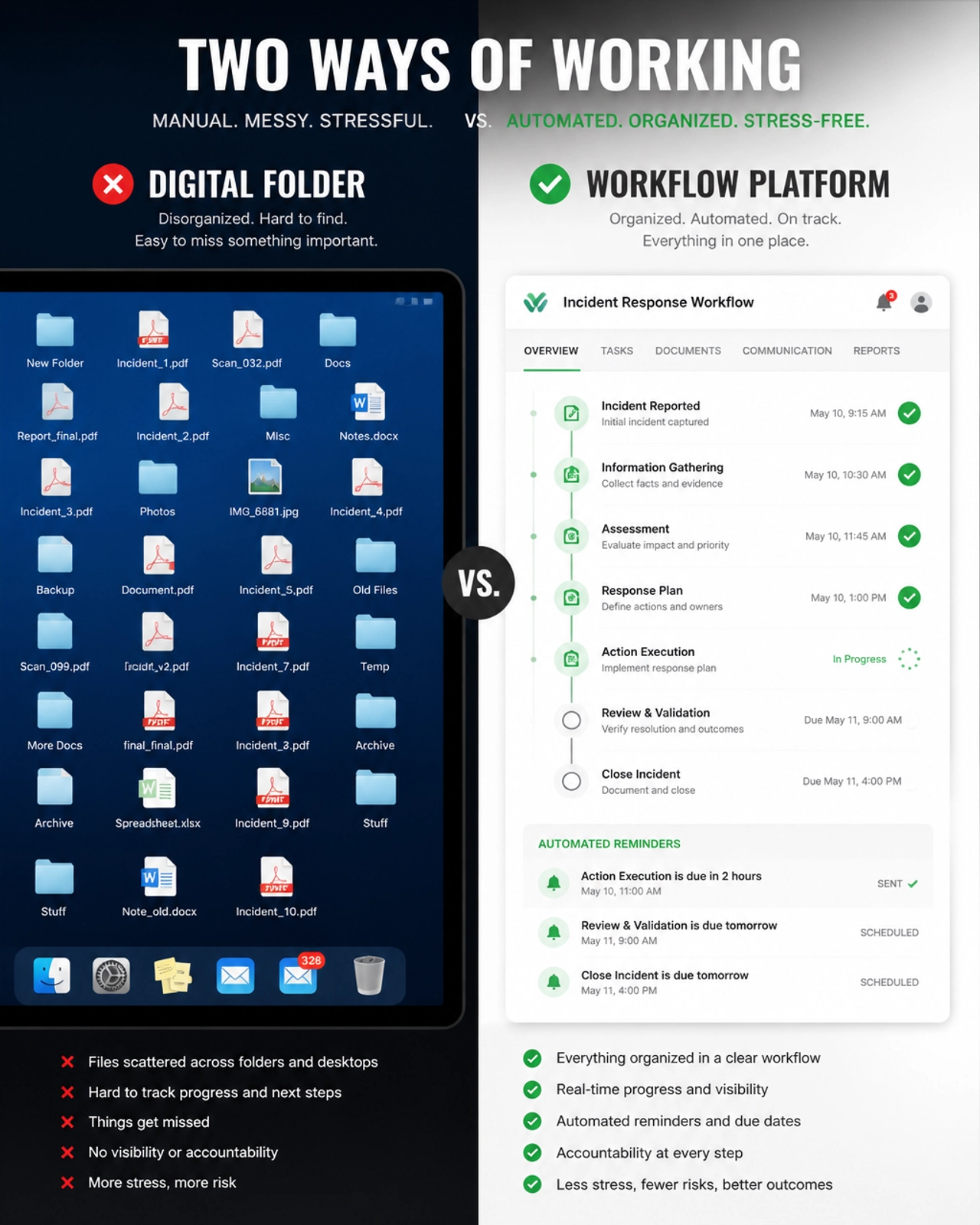
You open your folder. It’s empty. Well, it’s not empty, but it’s just a collection of disjointed notes, a final warning PDF, and no record of the process you followed.
This is the "digital folder" trap. And in 2026, it’s a massive liability.
Why a "Digital Folder" Isn't Enough
A workplace investigation is not a document management problem. It's a workflow management problem.
That is the shift many teams still miss. Documentation does not equal process. Every HR pro has a folder. Not every HR pro has a process.
This is where event-driven compliance matters. A complaint is not a document. It's an event. Events create obligations. Obligations create deadlines. Deadlines require action.
Many HR teams think that having workplace investigation software just means having a place to store files. They use SharePoint, Google Drive, or even just a sub-folder in their HRIS.
The problem is that these tools are passive. They store what already happened. They do not move the work forward. They don’t tell you when you’re missing a step. They don’t remind you that a week has passed since the intake. They don't help you prove you were "prompt" or "thorough" if a lawyer comes knocking.
According to the EEOC, retaliation is one of the most frequently alleged bases in discrimination charges. If you can't prove that you followed a consistent, fair, and active process, you’re already behind.
The EEOC Standard: Prompt and Adequate
When the EEOC looks at how you handled a complaint, they focus on two words: Prompt and Adequate.
1. What is "Prompt"?
The EEOC guidance suggests that opening an investigation one day after a complaint is a "promising practice." Waiting two months without a very good reason is likely going to be seen as a failure. In a busy manufacturing or logistics environment, "we were short-staffed" is rarely accepted as a valid excuse for delaying an investigation into harassment or safety concerns.
2. What is "Adequate"?
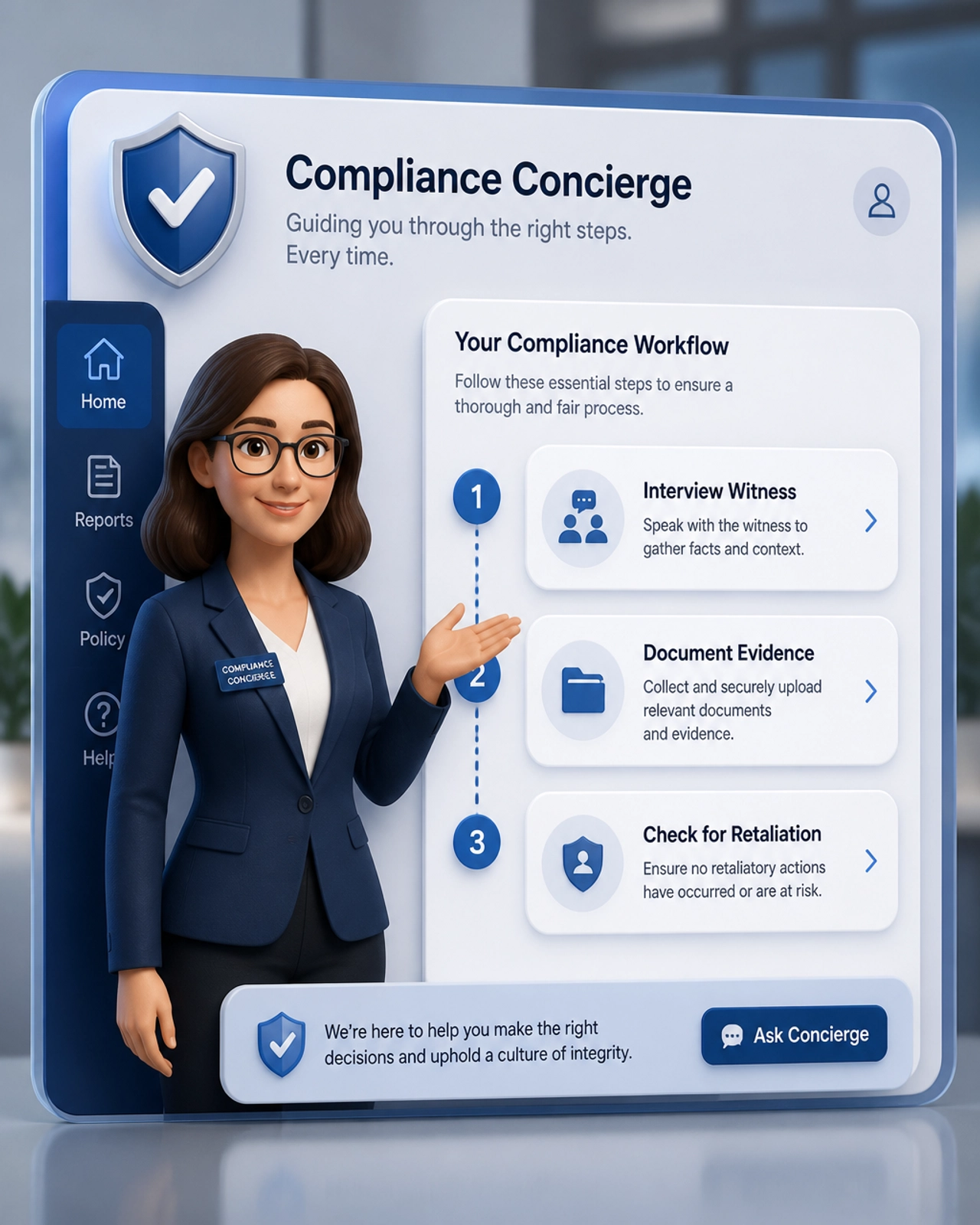
An investigation is adequate if it is thorough enough to reach a "reasonably fair estimate of the truth." This means:
If your "software" is just a folder, you have to remember to do all of this manually. If you forget to interview one witness, or you lose the notes from a follow-up call, your investigation is no longer "adequate."
The Retaliation Landmine in Manufacturing and Logistics
In high-stakes industries like manufacturing and logistics, retaliation doesn't always look like a sudden firing. It often looks like a change in the "daily grind."
If an employee files a complaint and then:
...that can be considered a "materially adverse action."
This is why documentation does not equal process. A complaint is not a document. It's an event. Events create obligations. Obligations create deadlines. Deadlines require action.
The real risk sits in the invisible handoffs.
The employee reports a concern. The supervisor takes the first call. HR opens a case. Operations adjusts coverage for the shift. Scheduling moves people around. A manager decides whether to issue discipline. Nobody means to create retaliation risk, but each handoff changes the facts on the ground.
Complaint → supervisor → scheduling → discipline → retaliation.
That is how a weak process turns into a legal problem.
Without an event-driven compliance system, HR often has no idea these changes are happening in real time. The supervisor makes the shift change in one system. Scheduling updates coverage in another. A write-up gets issued at the plant level. HR does not see the connection to the open investigation until it is too late.
This is where most investigations break down. Not in the interview notes. In the handoffs between departments. If nobody owns the workflow across those handoffs, nobody is really managing the risk.

How Workflow-Driven Software Changes the Game
True workplace investigation software shouldn't just be a filing cabinet. It should manage the work. That is the point of event-driven compliance. A complaint is not a document. It's an event. Events create obligations. Obligations create deadlines. Deadlines require action.
1. Automated Guardrails
Instead of hoping you remember to follow the anti-retaliation policy, the software should prompt you. "It has been 30 days since the complaint was closed. Have you checked in with the complainant to ensure there has been no change in their shift or treatment?"
2. Standardized Intake
Every investigation should start the same way. Whether the report comes through an anonymous hotline, a supervisor's phone call, or an incident report on the floor, the data should flow into a centralized system that assigns a deadline immediately.
3. Proof of Neutrality
If an investigation is handled by a supervisor who is friends with the accused, the whole process is tainted. Workflow software can flag potential conflicts of interest or ensure that high-level complaints are automatically routed to a neutral third party or a senior HR Director.
4. Cross-Departmental Visibility
This is where traditional HRIS systems fail. An investigation often involves safety (OSHA logs), operations (shift changes), and HR (discipline). A workflow-driven platform connects these dots. It ensures that if a complainant is being disciplined for a safety violation, the HR team is alerted so they can review the action through a retaliation lens before it happens.
More importantly, it creates visibility across the invisible handoffs. If the complaint started with a supervisor, changed staffing in scheduling, and ended with a write-up in operations, the system should show that chain clearly. That is what process looks like. Not a folder full of files. A visible sequence of actions, owners, deadlines, and decisions.
Practical Next Steps for HR Leaders
If you are still relying on digital folders, it's time to audit your process. Ask yourself these four questions:
Actionable Recommendations
If there is one idea to take from this, it is simple: documentation does not equal process. Every HR pro has a folder. Not every HR pro has a process.
That is why event-driven compliance matters. When a workplace issue lands on your desk, the real risk is rarely the first note you saved. It is everything that happens after. The handoffs. The deadlines. The follow-up. The discipline decision that gets made in another department.
A complaint is not a document. It's an event. Events create obligations. Obligations create deadlines. Deadlines require action.
Good workplace investigation software helps you manage that action. That is how you build a process you can defend.