What's the conviction behind this keyword?
Workers' Comp isn't just about managing insurance claims; it's about managing the operational ripple effect. When an employee is injured, the 'claim' is just the tip of the iceberg. The real cost is the fragmented communication between the carrier, the doctor, the safety manager, and the production supervisor. Most 'workers compensation software' is just a digital filing cabinet for PDFs. Our conviction is that WC software should be a workflow engine that connects medical restrictions to labor scheduling in real-time, ensuring compliance and reducing the 'wait-and-see' costs that lead to litigation.
A forklift clips a rack in your warehouse. The driver is okay, but they have a twisted ankle and a bruised shoulder.
In most companies, this triggers a predictable sequence of paperwork. The supervisor fills out a form. The HR Manager opens a "claims management" portal and uploads a PDF. Then, everyone waits. They wait for the doctor's note. They wait for the carrier to call. They wait for the employee to say they’re ready to come back.
This "wait-and-see" approach is the most expensive way to handle workers’ compensation.
The problem isn't the injury itself; it’s the operational ripple effect. When an employee is injured, the "claim" is just the tip of the iceberg. The real cost is the fragmented communication between the carrier, the doctor, the safety manager, and the production supervisor.
Most workers' compensation software is designed to be a digital filing cabinet: a place to store PDFs of medical bills and incident reports. But a filing cabinet doesn't solve a production problem. You don't need a place to put files; you need an operational engine that connects medical restrictions to your floor roles in real-time.
The "Filing Cabinet" vs. The Operational Engine
Most HR teams are the "human integration layer" of the company. They take a restriction from a medical note, look at a spreadsheet of open roles, call a supervisor to see if those roles are actually available today, and then email the carrier to tell them the employee is back on light duty.
When you treat workers' comp as a documentation problem, you end up with "unclosed loops." An unclosed loop is a handoff that failed. It’s the doctor’s note that sat in an inbox for three days while the employee stayed home on indemnity pay. It’s the supervisor who didn’t know the employee was cleared for "no overhead lifting" and put them back on the assembly line, risking a re-injury.
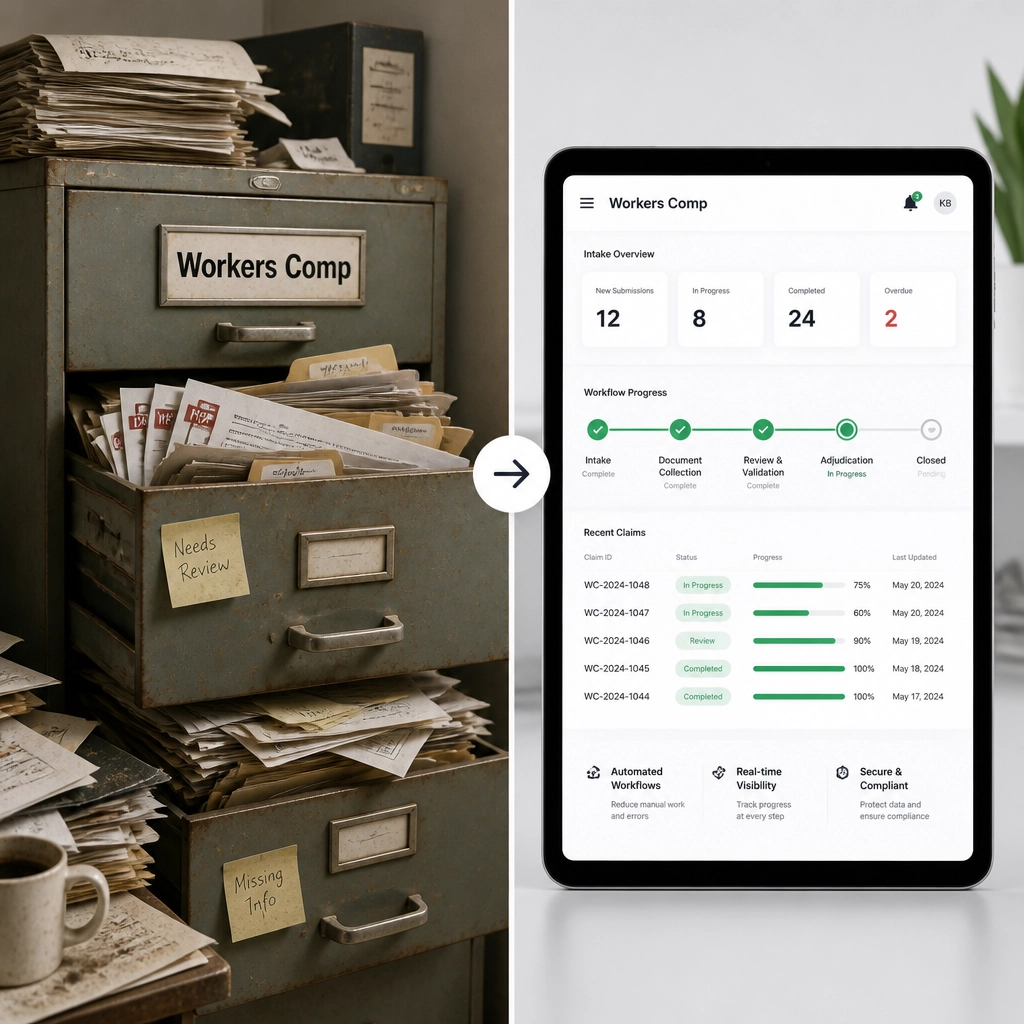
Operational intelligence changes this. It treats an injury as a workforce event, not just an insurance claim.
In a high-stakes environment like manufacturing or logistics, an injury isn't just a medical bill. It’s an empty seat on the production line. It’s a change in the shift schedule. It’s a potential OSHA recordable event that needs to be logged within seven days.
If your software doesn't connect these dots, you aren't managing the risk: you're just recording it.
The Cost of the "Wait-and-See" Approach
Data from the National Council on Compensation Insurance (NCCI) shows just how much communication gaps cost. When a claim is reported three weeks after an injury, the costs are roughly 30% higher than those reported within the first week. By the four-week mark, costs are 40% higher, and the risk of litigation doubles from 16% to 32%.
Why does the risk of a lawsuit double just because of a delay? Because silence feels like negligence to an injured employee.
According to the 2014 Predictors of Worker Outcomes Study, employees who fear they might be fired after an injury: a common result of poor communication: experience an average of four additional weeks of disability. They are also twice as likely to be unemployed later and significantly more dissatisfied with their medical care.
When an employee feels ignored, they stop looking at you as their employer and start looking for an attorney. Litigation isn't usually caused by a "bad actor"; it’s caused by a process failure.
Linking Medical Restrictions to the Floor
The biggest gap in traditional workers' comp software is the "Return-to-Work" (RTW) bridge.
A doctor might write a note saying "No lifting over 10 pounds." In a generic system, that's just a text field. In a system with operational intelligence, that restriction is mapped directly to your operational reality.
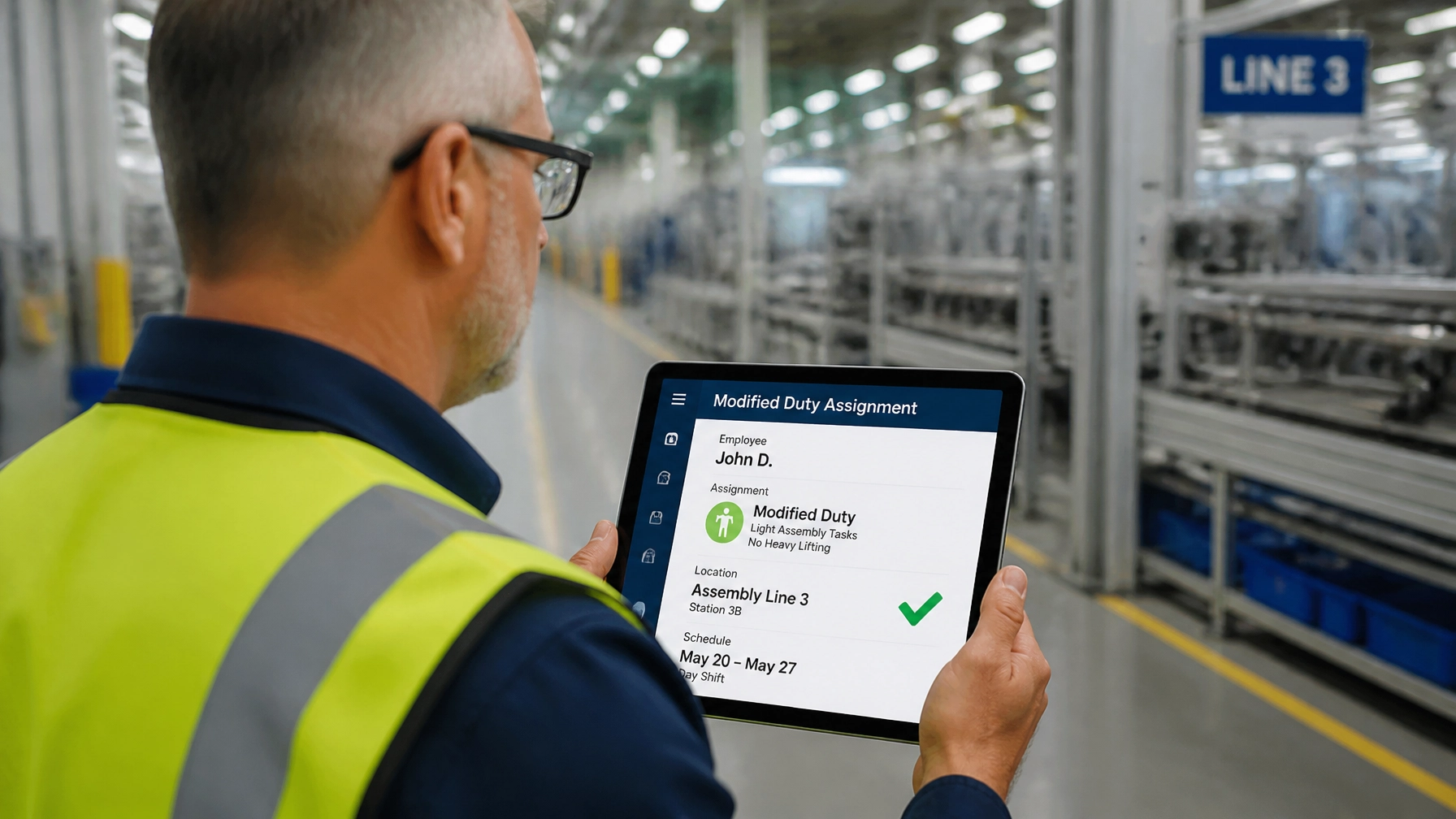
For a logistics company or manufacturer, this means the software knows which stations on the floor meet those specific 10-pound restrictions.
- Real-Time Visibility: The production supervisor sees exactly who is cleared for modified duty and which roles they can fill today.
- Reduced Indemnity Costs: You bring the employee back faster, which reduces the "lost time" payments the carrier has to make: directly impacting your Experience Modification Rate (EMR).
- Closing the Compliance Loop: The system tracks the ADA interactive process simultaneously. If a WC injury turns into a permanent disability, you already have the audit trail of accommodations.
Documentation Does Not Equal Process
We often say at InfraNet that documentation does not equal process. Just because you have a PDF of a 301 incident report doesn't mean you have a safe workplace.
Consider the "Machine 90" problem. A safety manager might see four different maintenance requests for a faulty latch on a machine. Each one was fixed and "documented." But because the safety incidents were in one system, workers' comp claims in another, and maintenance logs in a third, nobody saw the pattern.
Operational intelligence pulls these fragmented events into one view. It surfaces the fact that "Machine 90" is causing recurring near-misses before it causes a $50,000 claim. The American Society of Safety Professionals estimates that indirect costs: like production downtime and retraining: can be up to 20 times the direct cost of an injury.
By the time a claim hits your desk, the "event" has already happened. The goal of your software should be to ensure that the next event doesn't happen, and that this one is closed as efficiently as possible.
Practical Takeaways for HR Directors
If you are managing HR for a workforce of 50 to 1,500 employees, you don't need more dashboards. You need a system that tracks ownership and follow-up.
- Audit Your Handoffs: Where does the information stop moving? Is it between the supervisor's verbal report and the HR entry? Is it between the medical clinic and your carrier? Identify the "unclosed loops."
- Engagement is the Best Defense: Use a system that prompts regular communication with the injured worker. According to OSHA guidance, involving workers in the safety and recovery process is the most effective way to reduce long-term costs.
- Bridge the Gap to Operations: Don't let Workers' Comp stay in an HR silo. Bring the production supervisors into the loop. They are the ones who actually manage the return-to-work process on the floor.

Workers' Compensation is not just an insurance line item. It is a core operational challenge. When you move beyond the "claim" and start managing the operational intelligence of your workforce, you stop being a filing clerk and start being a risk strategist.
Stop chasing PDFs. Start closing loops.
Post Summary: Workers' Compensation isn't just about insurance claims; it's an operational event that impacts your production floor. Learn why "operational intelligence" is the key to reducing litigation and closing compliance loops in manufacturing and logistics.
SEO Title: Workers' Comp Software vs. Operational Intelligence | InfraNet HR