It is 6:05 AM on a Friday. On the floor of a mid-sized logistics hub, the first shift is still settling in. The air is thick with the smell of diesel and the rhythmic beep of reversing forklifts. A veteran supervisor stands by the loading dock, checking the manifest, when a forklift clips the corner of a heavy racking unit.
The driver slams the brakes. The rack shudders, but the pallets stay seated. No one is hurt. There is no blood, no twisted metal, and no insurance claim. The driver offers a sheepish apology, the supervisor gives a stern warning about speed, and within two minutes, the manifest is being signed.
In most organizations, this event is over. It might be scribbled on a paper "Near-Miss" form and filed in a cabinet, or it might disappear into a "Miscellaneous Safety" spreadsheet. But this "near-miss" isn't a non-event. It’s a loud, vibrating warning of a systemic failure that is currently invisible to leadership.
The real value of employee incident management software isn't its ability to document what happened; it’s its ability to see the pattern of what is about to happen.
The Danger of "Fine"
In manufacturing and logistics, "fine" is the most dangerous word in the vocabulary. If a worker almost trips but catches themselves, they are "fine." If a machine sparks but keeps running, it’s "fine."
The problem is that these isolated events are rarely isolated. They are symptoms of operational friction. When you treat a near-miss as a discrete, closed event, you are essentially betting that lightning won't strike twice.
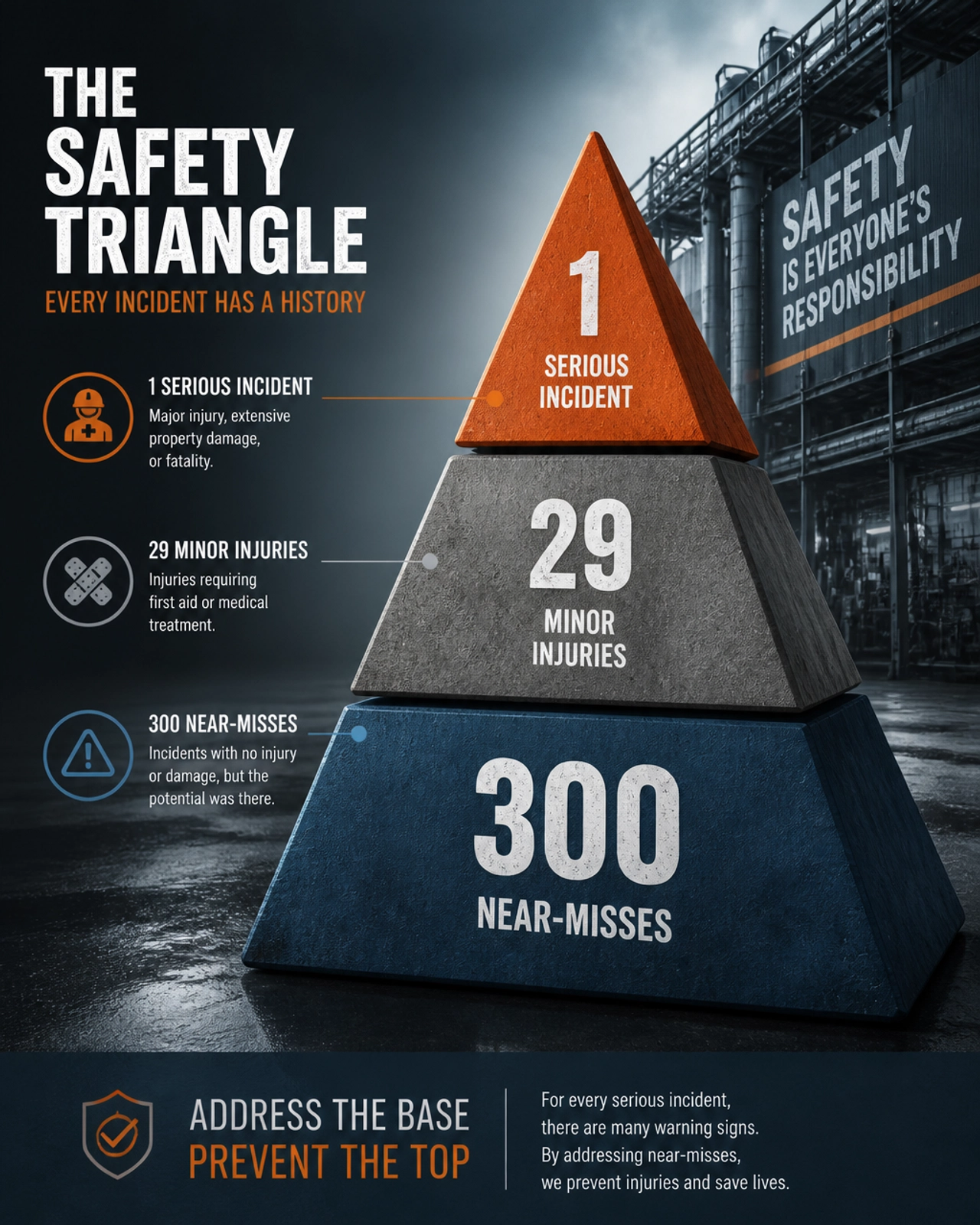
Statistically, that’s a losing bet. According to the National Safety Council (NSC), for every one serious injury, there are typically 29 minor injuries and 300 near-misses. This is the "Injury Triangle" (or Bird's Triangle). If your safety culture and your employee incident management software are only focused on the tip of the triangle, the recordable injuries, you are ignoring 90% of the data that could prevent the next disaster.
The Buyer’s Problem: The Fragmentation of Truth
Most operations leaders believe they have a safety problem or a compliance problem. In reality, they have a handoff problem.
When a near-miss occurs, the work created by that event is immediately fragmented:
- The Supervisor wants to keep production moving. They might log the event on a clipboard.
- The Safety Manager wants to perform a root-cause analysis, but they won't see that clipboard until the end of the week.
- HR is left in the dark because "no one was hurt," so they have no record of the driver’s repeated near-misses or their need for remedial training.
- Maintenance doesn't know the rack was struck, so they don't inspect the structural integrity of the steel.
The "truth" of the event exists in four different places, managed by four different people, using three different tools. By the time anyone tries to connect the dots, the "near-miss" has become a workers' compensation claim.
The Traditional Approach: The Spreadsheet Trap
For decades, the standard solution has been "The Spreadsheet." You know the one: an Excel file managed by the Safety Director that lists dates, times, and descriptions.
While spreadsheets are great for lists, they are terrible for coordination. They don't send alerts to maintenance when a rack is hit. They don't cross-reference a driver's safety record with their HR file. They don't notify the operations manager that 80% of near-misses are happening during the 6:00 AM shift change on the East Dock.
Traditional employee incident management software often behaves like a digital spreadsheet. It provides a place to store data (a "case management" approach), but it doesn't coordinate the work that needs to happen across departments to fix the root cause.
A Better Approach: Pattern Recognition and Operational Intelligence
Modern workplace operations require a shift from documentation to intelligence. This means seeing an incident not as a file to be closed, but as a signal to be analyzed across time, shifts, locations, and departments.
A better approach focuses on three pillars:
- Cross-Departmental Visibility: The moment an incident is logged, it should trigger workflows for Safety, Maintenance, and HR simultaneously.
- Contextual Data: A near-miss isn't just a "near-miss." It’s an event involving a specific asset (Forklift #42), a specific location (Zone B), and a specific person (Employee X).
- Trend Aggregation: If Forklift #42 is involved in three near-misses in two weeks, the problem might not be the driver; it might be a mechanical failure or a blind spot in the warehouse layout.
When your software connects these dots, you move from being reactive to being proactive. You aren't just filing OSHA logs; you are re-engineering the workflow to eliminate risk.
Introducing InfraNet: Where the Work Stays Connected
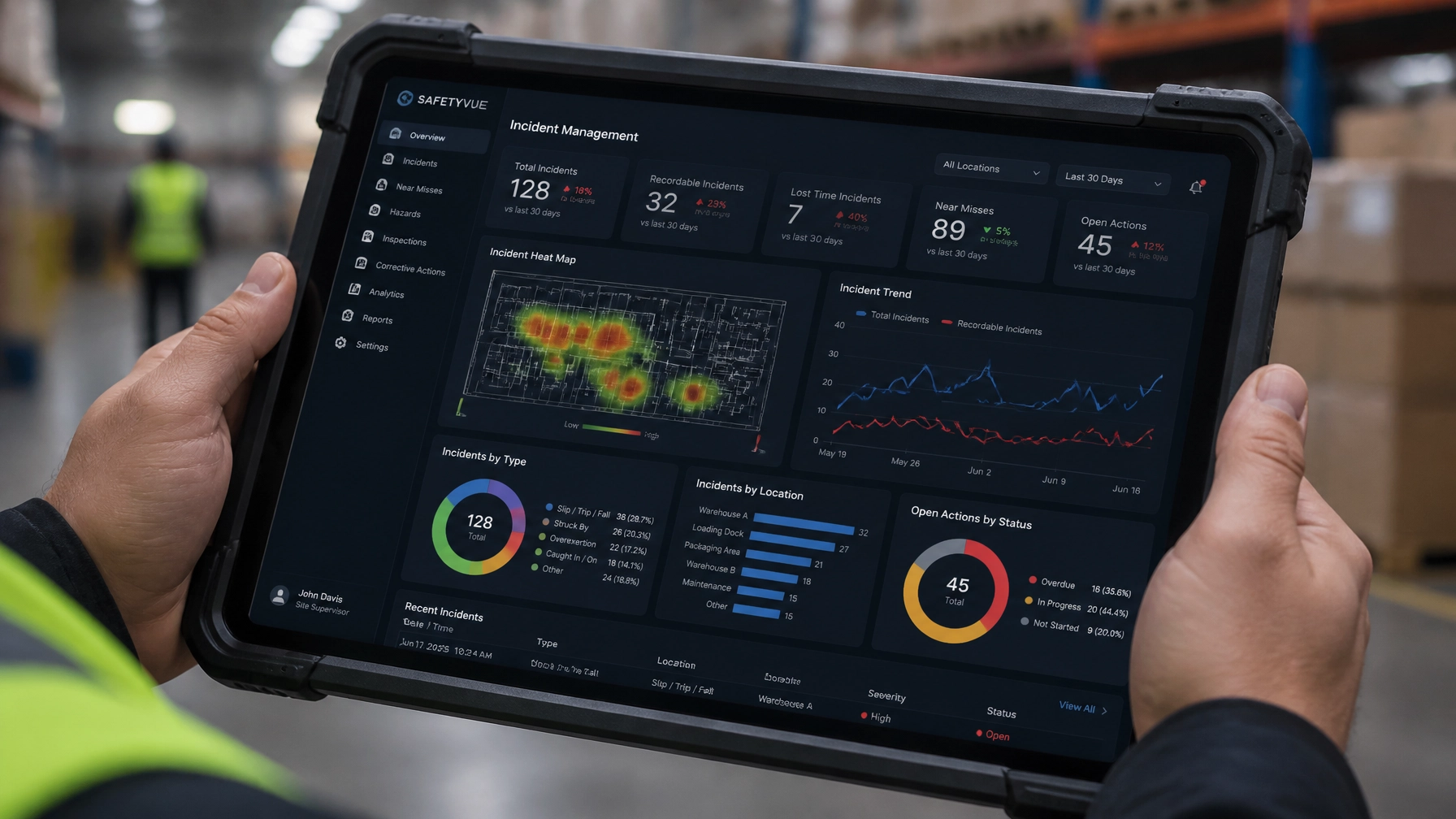
At InfraNet HR, we built our platform on the belief that employee events create work across the entire organization. We don't offer a "module" for safety and another for HR; we provide an integrated workforce management platform that surfaces operational intelligence.
When a near-miss is reported in InfraNet, it doesn't just sit in a folder. Our incident management platform ensures:
- Automated Routing: The right people are notified instantly based on the incident type, no more lost emails or forgotten clipboards.
- Full Audit Trails: Every investigation, photo, and corrective action is tracked in a single timeline, providing a defensible record for legal or compliance audits.
- Pattern Detection: Our reporting tools aggregate data across all categories, allowing you to see if a particular shift, supervisor, or equipment type is a recurring factor in incidents.
We don't just help you document the near-miss; we help you coordinate the response across Safety, HR, and Operations so the "next time" never happens.
The Broader Insight: Coordination is the Cure
The challenge of the modern workplace isn't a lack of data; it’s a lack of coordination. Organizations are drowning in information but starving for insight.
Every time a forklift clips a rack, a worker slips on a spill, or a "near-miss" occurs, your organization is trying to tell you something. If your employee incident management software is just a digital filing cabinet, you’re missing the message.
True operational excellence comes when the event happens once, but the work stays connected until the risk is gone. Stop filing incidents. Start solving patterns.
Frequently Asked Questions
1. Is near-miss reporting required by OSHA?
While OSHA does not generally require the reporting of near-misses unless they result in injury or property damage, they strongly encourage it as a best practice. Tracking near-misses is a core component of a proactive safety program and can be used as evidence of a "General Duty Clause" compliance.
2. How does employee incident management software reduce workers' comp costs?
By identifying and correcting hazards through near-miss and minor incident tracking, companies can prevent the high-cost "recordable" injuries that drive up premiums and experience modifiers.
3. What is the difference between a near-miss and an incident?
An incident is any unplanned event that resulted in injury, illness, or property damage. A near-miss is an unplanned event that had the potential to cause injury or damage but did not do so this time. Both should be tracked in your management system.
4. How can we encourage employees to report near-misses without fear of retaliation?
The most effective way is to implement a "No-Fault" reporting culture where the focus is on the systemic cause (e.g., poor lighting, faulty equipment) rather than individual blame. Modern software can also allow for anonymous reporting to build trust.
5. Why shouldn't we just use a spreadsheet for incident tracking?
Spreadsheets lack automated notifications, audit trails, and the ability to link data across departments. They are static documents that often lead to "data silos" where important safety trends are missed until it's too late.
6. Can incident management software help with OSHA 300 logs?
Yes. Modern platforms like InfraNet automate the generation of OSHA 300 and 300A logs, ensuring accuracy and saving dozens of hours of manual administrative work at the end of the year.
Recommended Articles
- The Handoff Problem: Why HR and Safety Need a Shared Language
- Beyond the Log: How to Use OSHA Data for Operational Excellence
- Workers' Comp Management: Moving from Reactive to Proactive
SEO Title: Pattern Recognition in Employee Incident Management Software | InfraNet HR
Meta Description: Discover why employee incident management software must focus on pattern recognition to prevent workplace injuries in manufacturing and logistics environments.