A worker on your production line, let's call him Joe, trips over a pallet. He says he's fine and keeps working. Two hours later, he’s limping. By the next morning, he’s calling out.
In most manufacturing plants, this is where the "black box" opens. The floor supervisor knows Joe is gone. The HR manager hears about it three days later via an email. The Safety Manager finds out when the OSHA 300 log needs updating.
At this moment, Joe isn't just an "employee record." He is a signal.
Most companies treat Joe like a data point to be stored in a database. They think "HR software for manufacturing" means a digital filing cabinet for certifications and payroll. But in a physically demanding industry, documentation does not equal process. A database is passive; it just sits there.
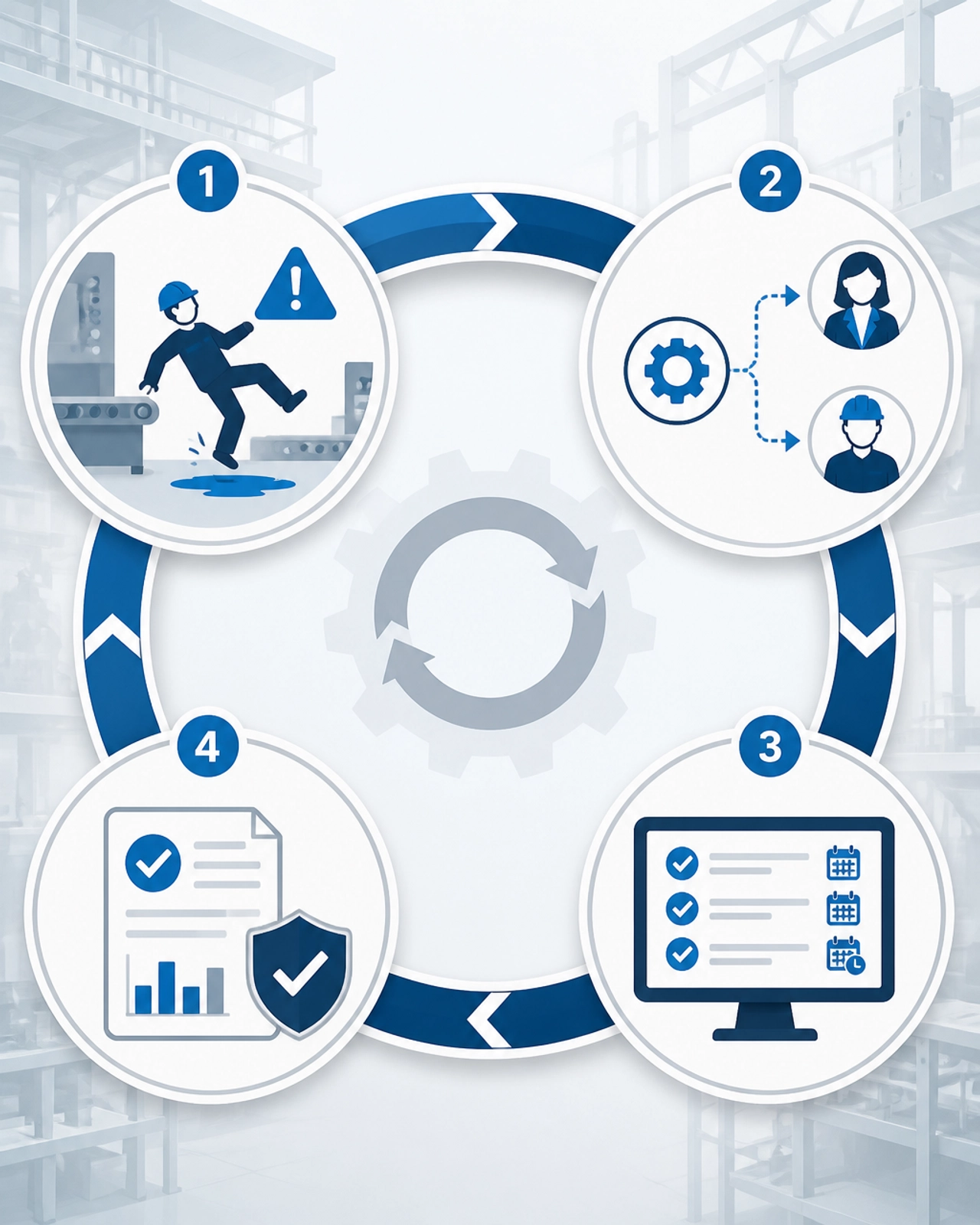
Manufacturing HR requires an operating system. An operating system doesn't just store data: it routes it. It takes the "signal" from the floor and triggers the right actions across safety, leave management, and workers' comp before the loop stays open too long.
The Signal: Every Event is a Trigger
In manufacturing, HR doesn't happen in a vacuum. It happens on the floor. When a worker is injured, it isn't just a medical event. It is a workers' compensation trigger, a potential OSHA recordable event, and an FMLA leave event all at once.
If your HR software treats these as separate tasks in different folders, you have a fragmented data problem.
According to the Bureau of Labor Statistics (BLS), the manufacturing sector has an injury rate of 2.7 cases per 100 full-time workers. That is significantly higher than the private industry average of 2.3. When injuries are frequent, the "manual handoff" between departments becomes a liability.
If the supervisor doesn't tell HR, the FMLA clock doesn't start. If HR doesn't tell Safety, the OSHA 300 log is wrong. Every minute that passes without coordination is an unclosed loop. Unclosed loops create legal risk, retaliation claims, and unnecessary costs.
Documentation Does Not Equal Process
Many HR platforms sell "compliance" by offering a place to upload a PDF. They tell you, "Look, you have a record of the incident! You are compliant."
This is a dangerous assumption.
Compliance is not a static document; it is a moving workflow. For example, under the Americans with Disabilities Act (ADA), you are required to engage in an "interactive process" for accommodations. Simply filing a doctor’s note in a database doesn't prove you did that. You need to show the back-and-forth, the options explored, and the final decision.
An operating system approach ensures that when a "return to work" note is uploaded, it automatically triggers a task for the manager to review the ADA interactive process. It doesn't wait for a human to remember to check a folder.
The Real Cost of Fragmented Data
Workplace injuries in the U.S. cost manufacturing employers over $170 billion annually in direct and indirect costs, according to industry safety reports. These costs aren't just from medical bills. They come from:
- Lost Productivity: The line stops or slows down because a trained operator is missing.
- OSHA Fines: Failure to record an injury within the required 7 calendar days (29 CFR 1904.29) can lead to significant penalties.
- Litigation: Most employee lawsuits aren't about the injury itself; they are about how the employee was treated after the injury.
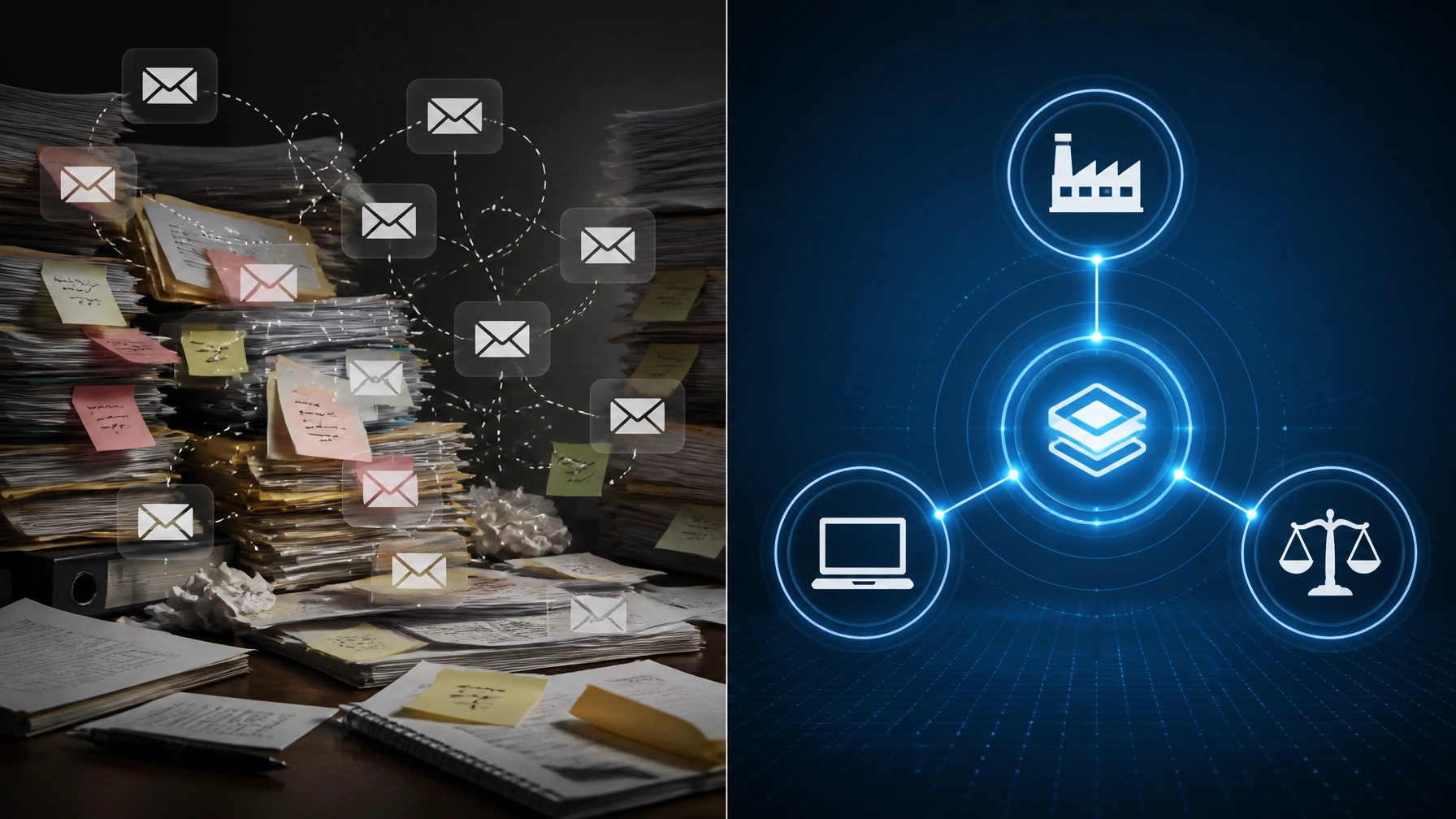
If your "HR software" is just a database, it can't tell you that an employee who just filed a safety complaint is the same person being disciplined for attendance. Without that visibility, you might accidentally trigger a retaliation claim because your data isn't talking to itself.
Closing the Loops: The InfraNet Way
At InfraNet HR, we don't believe in more dashboards. We believe in better routing. We transform isolated workforce events into operational intelligence.
When a "near-miss" or incident happens on the production floor, it shouldn't just be an entry in a log. It should be a trigger that:
- Routes the report to the Safety Manager for investigation.
- Alerts HR to start the FMLA/ADA eligibility check.
- Notifies the Carrier to begin the workers' comp claim.
- Flags the supervisor on the next steps for light-duty return-to-work.
This is what we call event-driven compliance. It's the difference between looking at a car's registration (database) and actually driving the car (operating system).
Practical Takeaways for Manufacturing Leaders
If you are evaluating your current HR tech stack, ask yourself these three questions:
- Is it active or passive? Does the software tell you when a deadline is approaching, or do you have to go looking for it?
- Does it bridge the floor and the office? Can a supervisor start an incident report on a tablet in 30 seconds, or do they have to walk to a desktop and log into a portal they barely use?
- Are the loops closed? When an injury case is "closed" in your workers' comp system, does it automatically update your OSHA logs and your leave tracking?
Manufacturing moves too fast for fragmented data. Your HR software shouldn't just be where you store your people's history: it should be how you manage your plant's future.
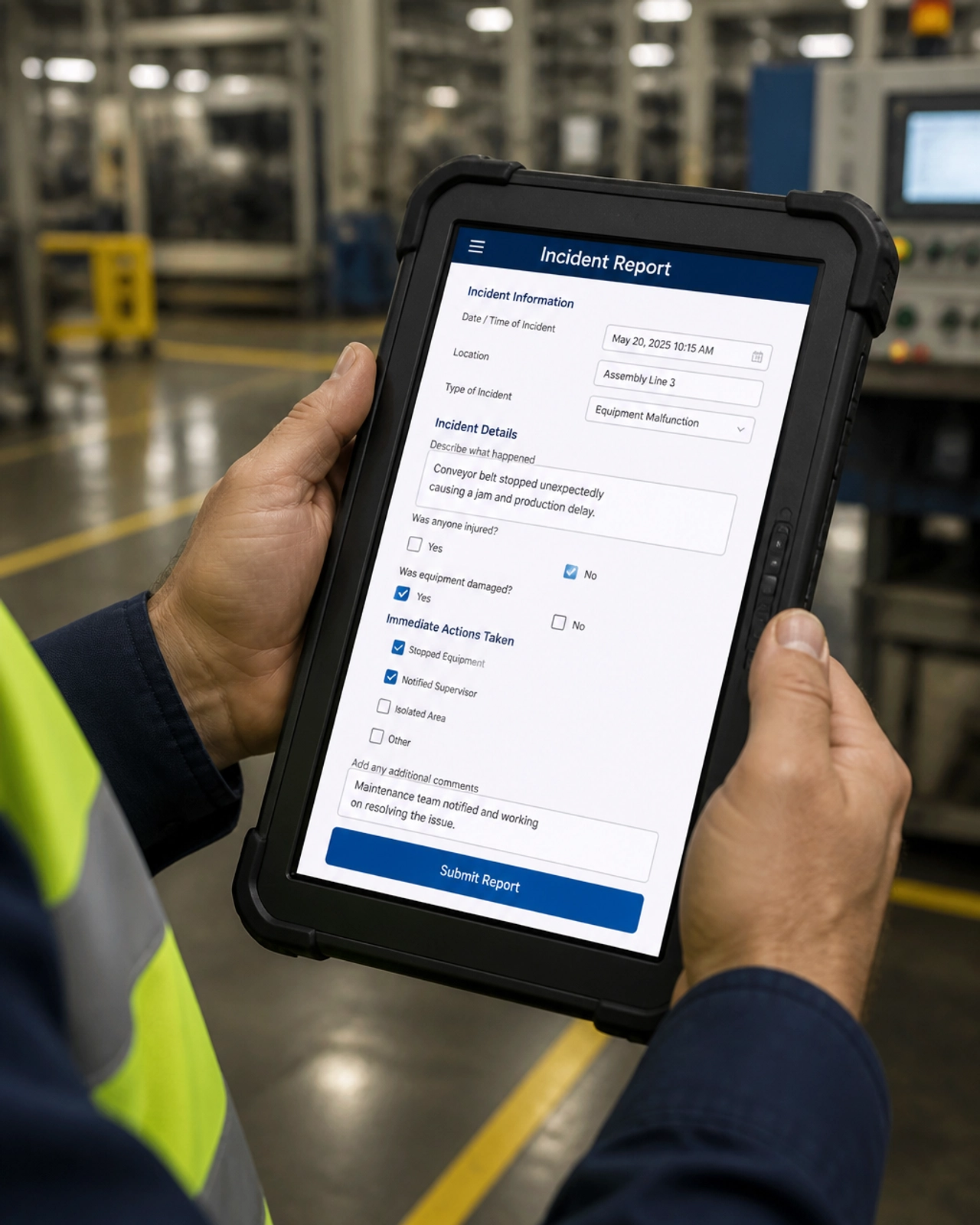
Ready to see what an operating system for your workforce looks like? Explore how our incident management platform turns production floor signals into closed-loop compliance.